Voiceworks launch: Brisbane edition


A rare Brisbane Voiceworks shindig — in one week’s time! Helllls yeah! This is editor Kat Muscat‘s and designer Elwyn Murray‘s final issue — and my final spin on the editorial committee — so make sure you come along to raise a toast to the end of an era and the start of a glorious new one. Welcome VW’s new ed, Elizabeth Flux.

Features: VW Perspective contributors James Butler, Sophie Overett, Emily O’GradyKhalid Warsame and Zenobia Frost; John Marsden Prize-winner, Jeremy Poxon; and the launch of new FREE Brisbane femmo zine, WOOLF PACK.

When: 6pm for 6.30pm, Friday 28 March 2014
Where: Avid Reader, West End
Tickets: Bookings essential online or on (07) 3846 3422. $7.50 entry fee includes a free drink.
Share: Invite yo’ friends along via facebook

Interview: BRISBANE (A DOING WORD)

Writer David Burton and director Claire Christian team up for Vena Cava’s latest production, BRISBANE (A DOING WORD). I caught up with David and Claire to find out more.


ZENOBIA FROST: People like to denigrate Brisbane as a place to live or make art, but it sounds like this play identifies the ways in which Brisbane has much to offer. Is that correct? Tell me about the play’s relationship to Brisbane.

DAVID BURTON: The play’s relationship to Brisbane is complex. Every artist I know has a complex relationship with this city. I’m a big Brisbane fan too, and a large part of this play is showing that Brisbane has a lot to offer but that it also has a lot to overcome. Brisbane’s main challenge is the relationship it holds with its artists, many of whom are looking to book a flight to Melbourne or Sydney! I was interested in why that it is — not on a political level, because that’s discussed enough — but on a personal, emotional, creative level. That’s what the play explores.

CLAIRE CHRISTIAN: I like to think that the play metaphorically high-fives Brisbane in a way too. And that by the very making of the work, Brisbane artists are doing their thing in Brisbane and loving on Brisbane.


ZF: Tell me about the play’s protagonist, Matty. What sets his story apart from your average coming-of-age?

DB: We’ve all met Matty. He’s the hopelessly ambitious, idealistic artist who believes theatre can change the world. He’s loved, funny, and imaginative, but he’s sadly lacking some sensitivity. I think he’s an interesting protagonist because he’s recognisable, and not necessarily likeable. Not likeable, but loveable. I’ve been Matty, I’ve been friends with a lot of Mattys, and I’ve watched many grow up, and many stagnate in a Matty-state. It’s funny and interesting to me.

CC: I think those of us in the arts all have an inner Matty at some point of our career: the people in our lives loving us, us hating ourselves, being a wanker about our art — perhaps that’s part of the process.

 BRISBANE (a doing word)


ZF: Matty explores comedy, slam, theatre, therapy and Jesus. Which part of his adventure is most memorable/resonant for you as writer and director, respectively?

CC: Matty’s overall journey, but the people around him are also on a journey because of him and his impact on their lives. He’s a pretty blissfully unaware of the ripple effect he causes. I hope audiences just wanna give him a hug — and tell him he’s okay. I think all artists need that. Scrap that, I think everyone needs that.


ZF: JWC is a distinctly Brisbane venue (and definitely a doing-wordy place). How does “Brisbane (a doing word)” use the space?

CC: We’re in the shopfront space, which has its challenges and limitations, but is also forcing us to be creative. I’ve done a show in this space before — I love the intimacy it forces, the proximity of the actors to the audience. Plus, I think it’s fantastic that Vena Cava are getting away from their home turf and spreading their wings. I think it makes a great comment about how they see themselves within the Brisbane landscape and about the work they want to make.


ZF: Vena Cava is a student theatre company; have the play’s themes resonated with the cast? In what ways?

C: I think so, yeah. I think it is spinning a few of them into an existential art related crisis. It’s a little confronting in that Matty’s essentially on their path, in their classes, possibly them — even though I think they all hope not. It’s probably inspired a whole lot of reflection about why they do what they do, and how they talk about what they do. I think it’s nice to be reminded not to be a dickhead. I think they get that now.


ZF: Does the play reveal anything unexpected about Brisbane?

DB: I don’t know what people’s expectations are of our city! I think we all have different perspectives on our town, and the play looks at that. None of the characters have the same relationship with this place.

CC: I don’t know, I’d like to think the play speaks more about being a young, confused twenty something — which could be applicable in any town. I think what makes the play speak of Brisbane is the ‘plight’ of artists here and their questions about where to place themselves for success. Maybe it speaks about the perception of success as an artist and how place and space contribute to that.


BRISBANE (A DOING WORD) plays at the Judith Wright Centre from 20 to 22 March.


THEATRE REVIEW: The Mountaintop

Photos by Rob McColl

It’s after midnight on Martin Luther King’s last night on earth. There’s still work to be done — but the good doctor has run out of cigarettes.

Dr King (Pacharo Mzembe) has just given his famous and final address at Mason Temple in Tennessee — in April of 1968. We find him kicking off his shoes in his Memphis motel room, calling room service in the hope of a late-night cup of coffee.

Delivering caffeine and cigarettes to Dr Martin Luther King Jr. was not what Camae (Candy Bowers) expected of her first day on the job as a motel maid. Lonely and, after all, only human, King insists Camae stay for a cigarette. He gets far more than he bargained for.

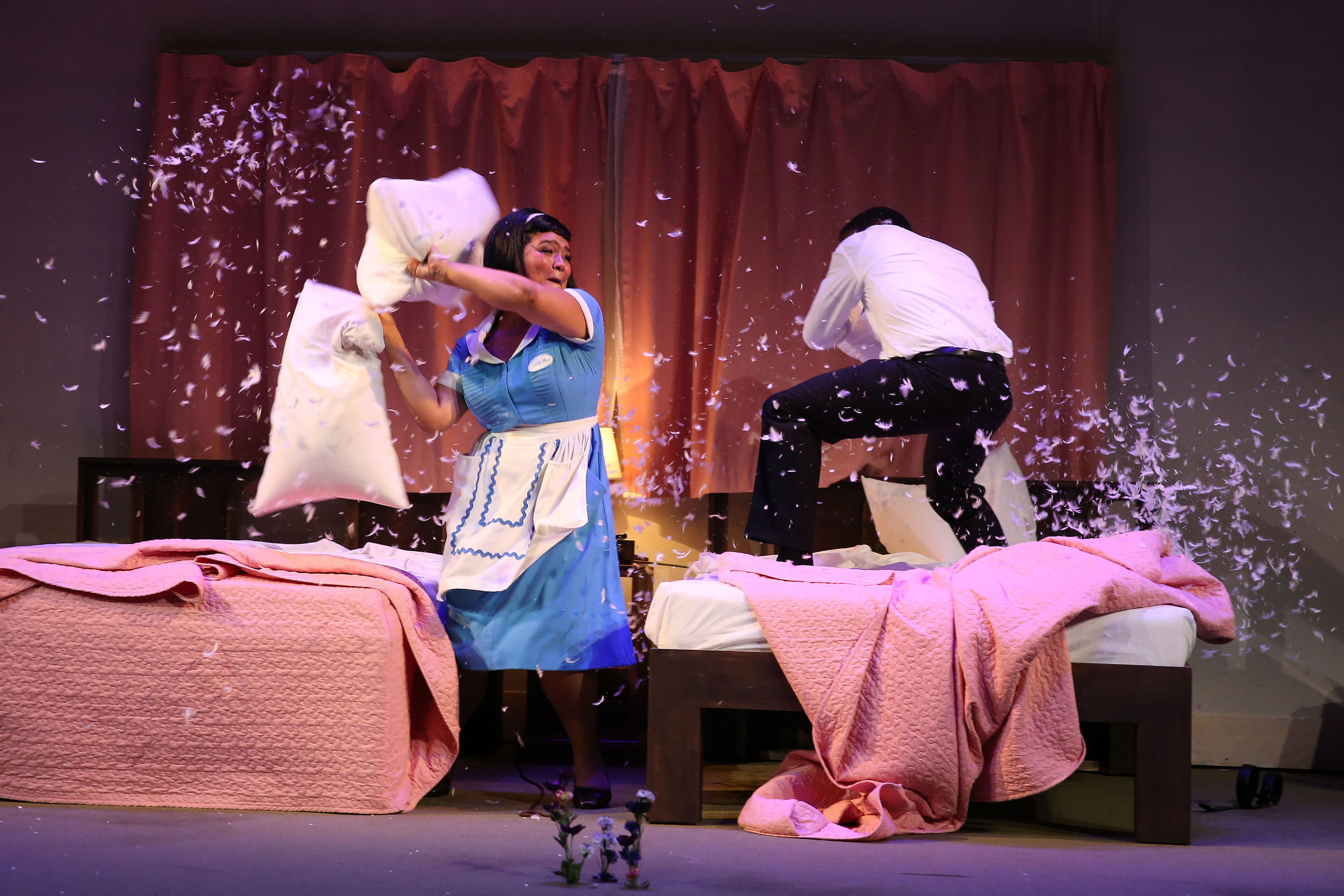
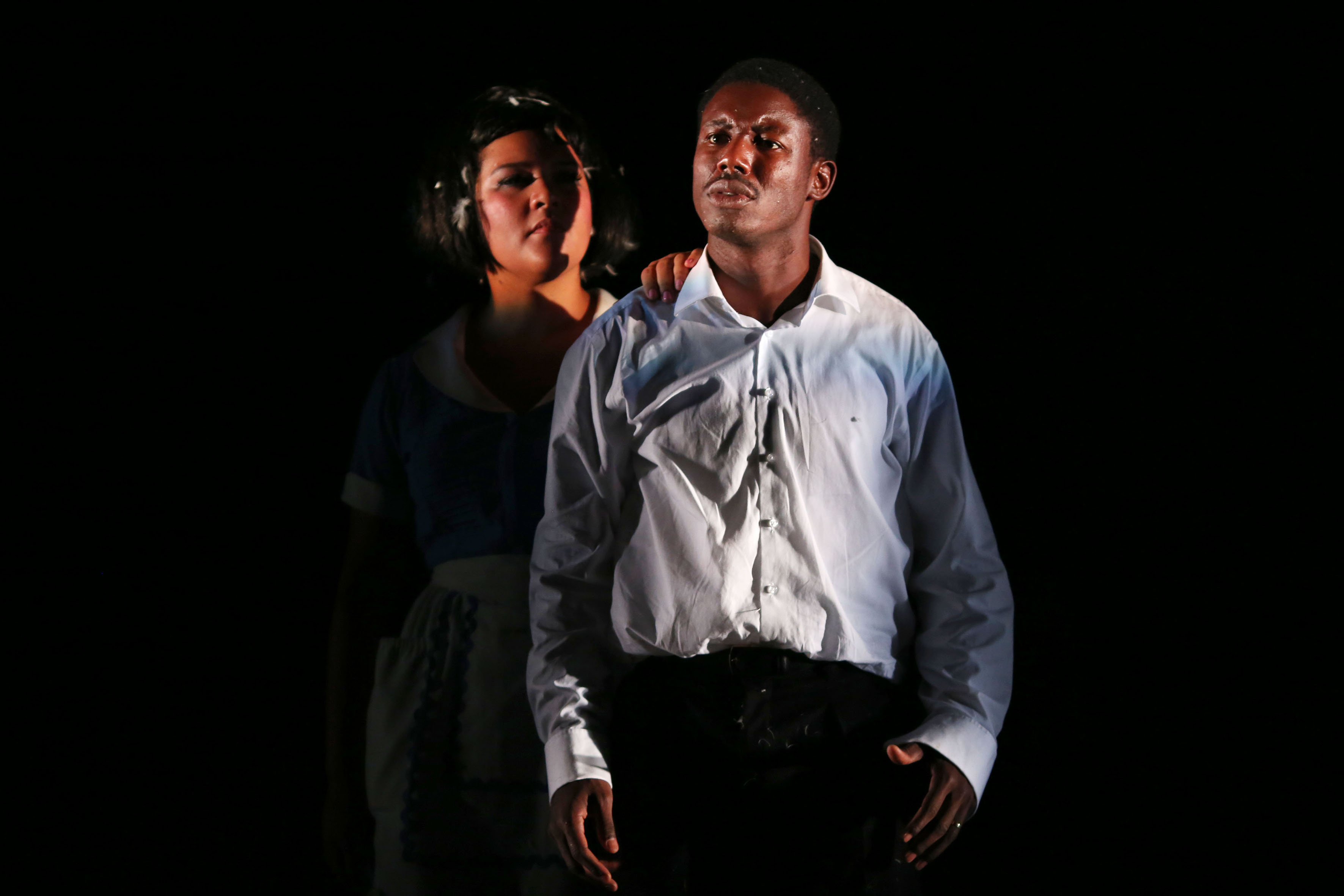
Candy Bowers as Camae and Pacharo Mzembe as Dr Martin Luther King in QTC's The Mountaintop  shot by Rob Mccoll

In his director’s notes, Todd MacDonald quotes writer Katori Hall: “This isn’t the ‘I Have a Dream’ King. This is King, the man, not the myth. I want people to see that this extraordinary man — who is actually quite ordinary — achieved something so great that he actually created a fundamental shift in how we, as a people, interact with each other.” Mzembe, with his sonorous voice, perfects Hall’s vision of King-the-man. His ego, wit and flaws make King’s terror, in facing death, all the more moving.

The Mountaintop’s strength hangs on its dynamic leads’ playful intimacy. Bowers’ brass and sharpness keep the play on the right side of sweet as Camae’s true identity is revealed. The more fun Bowers has with her character — giving her own Dr-King-esque speech, for instance — the more she settles into her Tennessee twang.

QTCM1279

Kieran Swann’s design and Ben Hughes’ lighting combine to create a singular effect: Room 306, with its mildewed pink curtains, seems to exist between worlds. Swann subtly evokes both the wonder and terror of what lies beyond. Tony Brumpton’s sound design has us enter the theatre to the swell of King’s various addresses; in a sense, this will prepare us for the powerful sensory overload of the finale (composed by Busty Beatz).

Queensland Theatre Company is off on the right foot with its 2014 season. Ultimately, The Mountaintop celebrates King’s reverberations on Earth, but challenges us not to forget that we share his human ability to change the world.

Candy Bowers as Camae and Pacharo Mzembe as Dr Martin Luther King in QTC's The Mountaintop  shot by Rob Mccoll

“Well, I don’t know what will happen now,” says King, in his final address on 3 April 1968. “We’ve got some difficult days ahead. But it doesn’t matter with me now. Because I’ve been to the mountaintop. And I don’t mind. Like anybody, I would like to live a long life. Longevity has its place. But I’m not concerned about that now. I just want to do God’s will. And He’s allowed me to go up to the mountain. And I’ve looked over. And I’ve seen the promised land.”

The Mountaintop (Queensland Theatre Company) runs at the Playhouse, QPAC, until 16 March 2014. Tickets $33–80.

not that poetry is a trap but prayer

I’ve just finished reading Nathan Curnow’s half of Radar, a 2012 Walleah Press collection shared between Nathan and Kevin Brophy. (The title of this post comes from “Gently Against the Grain”.) Great way to spend a spare sliver of a Tuesday. I should be reading more. Great poetry always reminds me I should be reading more. On to Kevin’s half!

I have some thrilling news I’ve been struggling to keep quiet: a poem of mine has been shortlisted in the Overland Judith Wright Prize for Emerging Writers. It is a wonderful feeling to be included on this list, alongside 11 very talented poets, especially as this is a personally significant poem. Our house-Francis (aka Jeremy Thompson) was shortlisted for this same prize back in 2011; he’d actually forgotten until today, so now I’m doubly pleased. May the odds be ever in our favour, shortlisters!

I’ve been darting back and forth between New Farm and everywhere else this week, with World Theatre Festival on at Brisbane Powerhouse. Thus far I’ve managed to catch All That Fall (Pan Pan Theatre), JiHa Underground (Motherboard Productions) and She Would Walk the Sky (Company 2). Here’s my review of the latter for The Guardian UK (the show is on its way to London after Brisbane) and here’s my friend Nerissa’s Arts Hub review. And here’s an overview/preview of WTF14 Tahnee Robinson and I cooked up for Theatre People.

Make sure you catch at least something at this innovative festival! I’ve never experienced anything like All That Fall, which I think I’d categorise as “listening theatre”. Audience members sat together in rocking chairs (I took the photo above to show you) and listened to Samuel Beckett’s first radio play commissioned for the BBC. I’ve heard The Great Spavaldos is a unique experience, putting you in the role of trapeze artist via, I presume, immersive science-magic. She Would Walk the Sky experiments with Brisbane Powerhouse’s wonderful and challenging spaces (read both reviews above to read some contrasting thoughts on that).

In other news, I have an essay on consent and ethical nonmonogamy included in the upcoming Sex Issue of The Lifted Brow, which you can pre-purchase here (or, if you’re in Brisbane, at Avid Reader after March 1). There’ll be launches in Melbourne and Sydney early in March, too. 88 pages of awesome writing by awesome writers (and also me). Woooo!

Zen x

P.S. I have bought a stack of crafting supplies and I am super excited to start creating horrifying regresty-able works of art for friends (and maybe also some poetry crafts). Stay tuned for BROOCHBACK MOUNTAIN.

WTF: Wedhus Gembel

Part II of our  World Theatre Festival interviews series brings us into conversation with ANDY FREER of Snuff Puppets.

Wedhus Gembel

OFFSTREET: Describe your show in under 25 words.
ANDY FREER: Wedhus Gembel explores the tensions between traditional and contemporary Indonesian life. It is a parable about the cycle of life and duality; from destruction there is creation, from chaos there is harmony.

OS: What stands out for you about the festival’s aims and programming in 2014?
AF: WTF’s commitment to presenting irreverent, cross-cultural, globally relevant programming matches Snuff Puppets’ company ethos to push boundaries and create entertaining, experimental and culturally diverse performances that challenge the possibilities of theatre today.

OS: Wedhus Gembel is an Australian-Indonesian collaboration. What have cast members learned from one another during this extended collaboration, especially in travelling to India and Peru?
AF: Collaboration is key to this work; it was how it was created and it is how it continues to run and be presented. Wherever we tour the show we run a free two-day performance-making workshop with people from the local community. The work created over those days is then presented within the show. Sharing and learning from each other within new groups of people and cultures gives everyone an amazingly diverse place to learn and discover.
Having toured throughout Java, Indonesia and been presented in Melbourne, Australia and Lima, Peru, the cultural diversity of these places has impacted this collaboration, creating an endlessly rich and fascinating learning experience for everyone involved. Wedhus Gembel is essentially a visual spectacle that transcends language barriers and covers universal themes.
The form lends itself to being a cross-fertilisation of cultures primarily because of the Australian/Indonesian collaboration, but also because it includes a performance-making workshop in whatever country we are presenting. Inherently we absorb the culture, living and performing with the people of these new places.

OS: What are the challenges and benefits of telling a story with puppets of such epic proportions?
AF: The challenges technically are often transporting and storing our giant puppets. Interestingly, the solving of this problem became a benefit. We were able to pack the whole show into our luggage quota; now a five-metre mountain-volcano plus all the puppets and props travel with us in our luggage. The scale of our puppets, all being bigger than an average human, give a sense for the audience of being in a transgressive space. It is in this place that audiences are disarmed and perspectives shifted.
The puppets play in the realm of mythology and dreams, creating a joyously chaotic and transformative outdoor spectacle of epic proportions.

OS: What will Wedhus Gembel leave its audiences feeling?
AF: Our aim is to give our audiences an insight into an amazingly rich and exotic Javanese culture. They will be swept up in a story of love and nature, superstition, chaos, magic and mythology. There is also some very cool music and we invite the audience onto and into the performance . . . it must be seen to be believed.

WEDHUS GEMBEL runs from Feb 18 to 22 for World Theatre Festival.

Poem: “Brisbane haiku”

accordion’s squall
twisting through bunched streets
crow’s neck distends

unexpected rain
the humid walls exhale
roast queenslander

slick black umbrella
bounces at a snapped joint
fallen bat

toowong traffic yawns
ghost-tram arrives earlier
than council bus

crowded station
arched spines against metal
bare tracks curve away 

backyard mangoes
swell, yellow and fall
in your absence

bushland
ironbarks one by one
telephone pole

Francis Thompson and Zenobia Frost
First printed in Petrichor, 2011

WTF14: Solpadeine Is My Boyfriend

Throughout my life as an arts reviewer, World Theatre Festival at Brisbane Powerhouse has been my favourite Brissie festival. You’ll see work you’d never otherwise have a chance to see — and you’ll never know what to expect from each year’s diverse program. To kick off our series of WTF14 interviews, I asked STEFANIE PREISSNER about bringing her black comedy from Ireland to Australia.

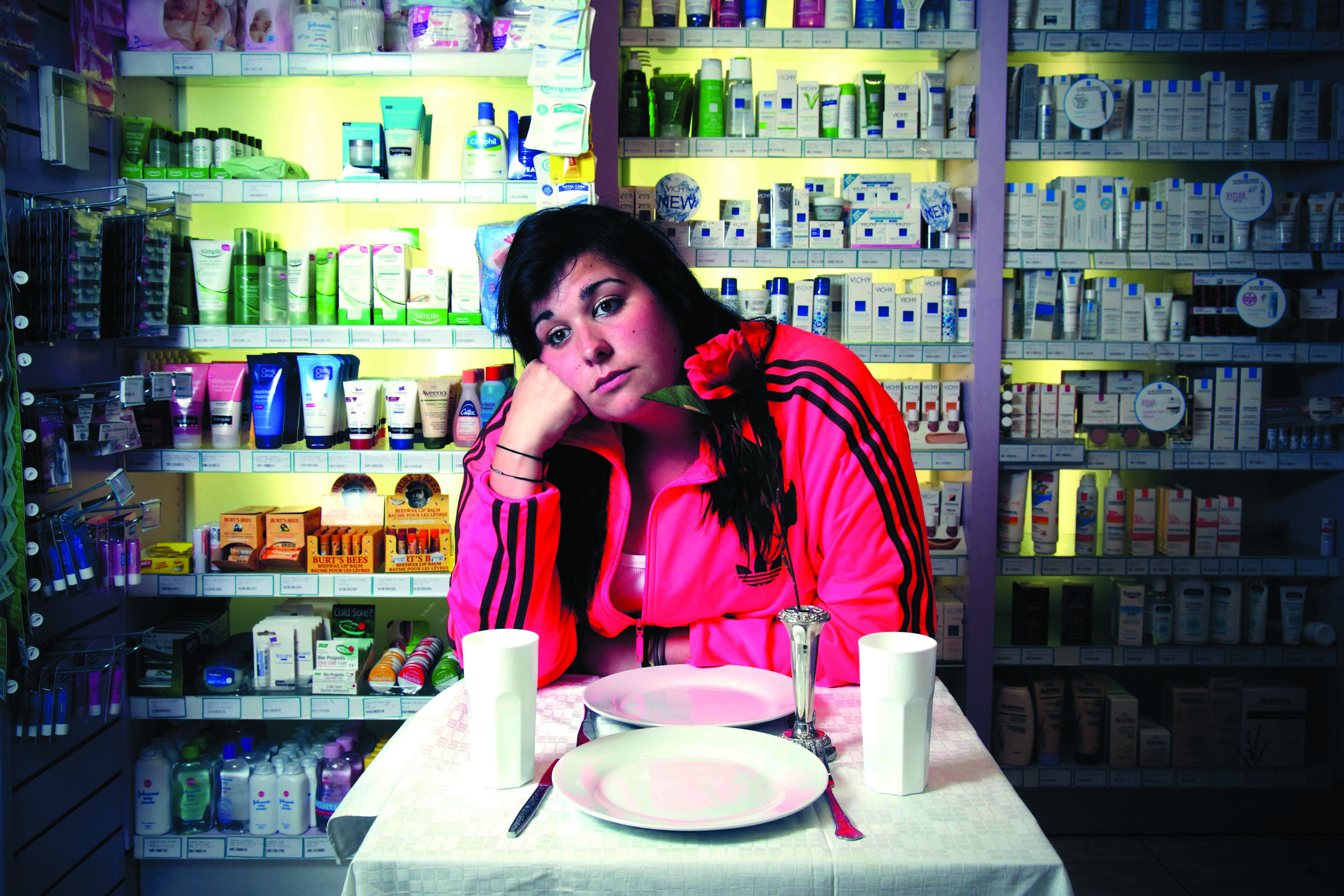
Solpadeine Is My Boyfriend

OFFSTREET: Describe your show in under 25 words.
STEFANIE PREISSNER: It’s an Irish girl’s experience of trying to maintain relationships with people who keep emigrating to Australia. Basically.

OS: I reckon WTF is one of Australia’s most diverse and dynamic festivals. What stands out for you about the festival’s aims?
SP: Having the opportunity to be part of a festival that programmes such varied and diverse work is something that doesn’t happen often. The stakes are high and that’s always scary but I’m excited to stand up there with the best of them.

OS: Have you visited Brisbane before? If no, what are you expecting?
SP: I’m looking forward to seeing a city that I have only heard about on Facebook from my friends who have moved there. It’s a place that is idealised and sensationalised in Ireland as a destination where all the things that are awful about Ireland and the life of an Irish 20-something are answered. Also: Steve Irwin’s zoo.

OS: The entirety of the show is told in verse. What were the benefits and the challenges of incorporating poetry into contemporary theatre?
SP: I think there’s a risk of autobiographical work becoming a bit indulgent or overly sentimental and putting restrictions on the writing opens up a whole other part of my brain and stops me saying the things that I have to re-read through my hands because they are so totally cringe-worthy. So challenging myself to write in verse makes me far more creative. Also on a very basic level, I can write in rhyme and not many people can, so I think it’s a skill worth using, practising and honing.

OS: How do you think the show’s themes will resonate with audiences on the other side of the world?
SP: I’m scared. I’m not sure. There’s a chance that people will be offended at the message of the show. I’m hoping that a discussion might start on Twitter with people’s opinions on it, but I am not expecting everyone to love it or agree with it. It’s a challenging piece.

Start the conversation with Stef on Twitter: @stefpreissner. SOLAPADEINE IS MY BOYFRIEND runs from Feb 12 to 16 at Brisbane Powerhouse for World Theatre Festival.

Poem: “Finding/Losing”

This is the land of your poems.
The trees covet sky and water;
droplets leap from miles up
and wash away our windshield.

This road is overwhelmed, bumping
its shoulders with the ankles of trees
who don’t perceive the winding below.
We slip by unnoticed,

too small to be considered
anything but ground dwellers
snuffling for mushrooms.
Really, we are here to gather ourselves.

We pass seven cordoned rockfalls:
a sign to scratch off the seven days
we have gathered like barnacles.
We hide in the scent of the forest,

relearning stillness with a quiet engine.


Zenobia Frost and Francis Thompson (in collaboration)
First printed in Petrichor, 2011