Total Eclipse of the Zen

Well! I’m about to go undercover (read: do a lot of poem-writing and grant-applying in bed) to prepare for upcoming festivals and new work. Salt and Bone is ready to launch (!) and I’m ready to zoom up and down the east coast (including a Lushie work retreat in Sydney). Here’s some of what’s coming up:
  • Queensland Poetry Festival: Celestial Monsters, 31 Aug @ 11am
    Judith Wright Centre shopfront space (FREE): Rachael Briggs and Zenobia Frost have been places humans shouldn’t tread. And they’ve returned with poems, song cycles and the lingering smell of graveyard dirt.
  • Queensland Poetry Festival: Into the Warmth, 31 Aug @ 1.45pm
    Judith Wright Centre performance space (FREE): Poetry can be sung from the rafters, and it can be an intimate act between strangers. Join us for this very special Sunday Poetry Yum Cha session – come in, find a seat, grab a snack, open your ears and your heart. Featuring Candy Royalle, Max Ryan, Cyril Wong, Zenobia Frost and Adam Hadley
  • Wunderkammer: The launch of Salt and Bone and Curio, 18 Sept @ 6pm
    Avid Reader (FREE): Kristin Hannaford and Zenobia Frost co-launch their new WALLEAH PRESS poetry collections. Join us for drinks and nibbles as we celebrate confluence, quolls and possums — and send Hannaford’s CURIO and Frost’s SALT AND BONE into the world. Bookings essential.
  • National Young Writers Festival: Newcastle, 2–5 Oct
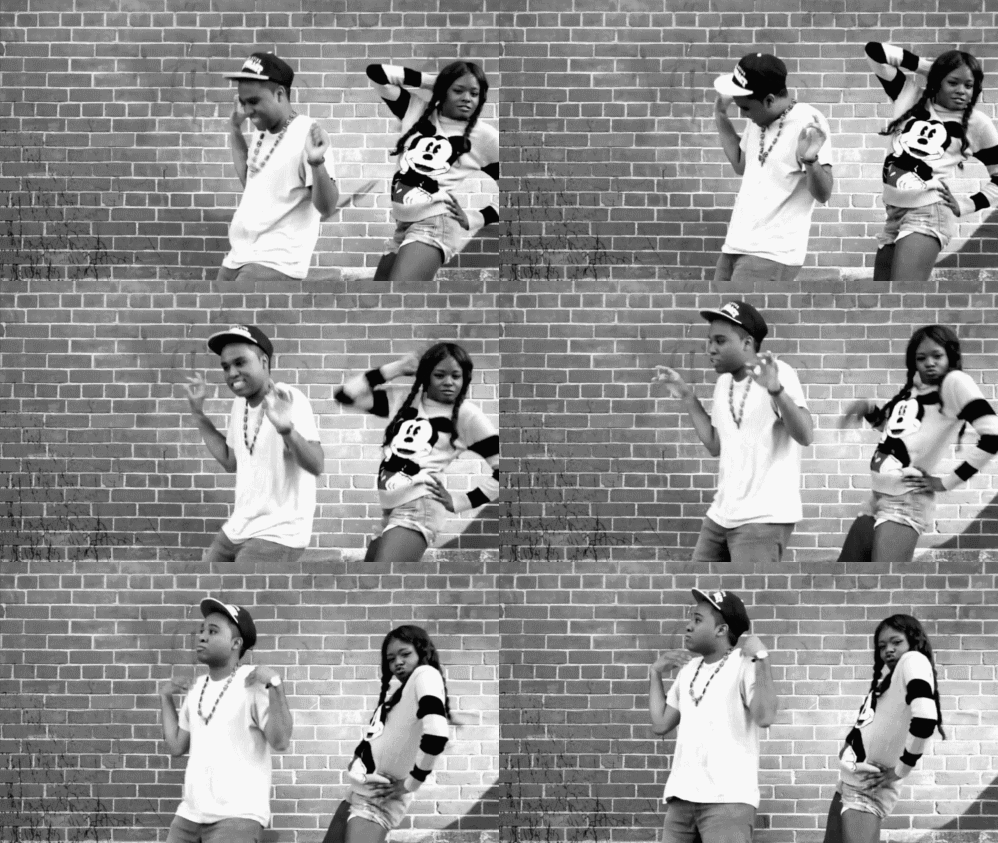
    Program launched soon — watch this space. Basically lots of this:
    212dance
  • Salt and Bone: Melbourne launch, 7 Oct
    Salt and Bone launches in good company at Hares & Hyenas. Details TBC.
  • Sleep: Oct–Nov


At last: SALT AND BONE

It’s here! It’s real! It’s got a spine and an ISBN!

Salt and Bone (Walleah Press) will be available for sneaky pre-sales at Queensland Poetry Festival, with a Brisbane launch in mid-September. Then, if I’m lucky, a little touring!

Melbourne-based artist Bettina Marson designed the beautiful front and back covers (and tolerated me emailing her about 340 million photos of curlews being weirdos). I think this cover is about as Brisbane as it gets:

SALT AND BONE

Here are some very nice things that Cordite Poetry Review‘s Kent MacCarter said about Salt and Bone:

“Frost’s are fearless poems, engaging with and confronting the intricacies of our sex-then-life-then-death eddy. Treacle, black pepper and clove, the weight of Atlas: these are poems Bertolt Brecht would delay his first morning coffee or crossword to consume … Their alchemic moods forge a contemporary age of bronze, one that, somehow, already sports your fingerprint embossed into its folds. Salt and Bone is her own Epic Theatre.”

If you’re super-duper keen, you can preorder the collection from Walleah.

Poems and Possums

July is here; we’re at the halfway mark of 2014 already.

I had a great time last week reading new poems at Ruckus! Slam and a few of 2014 Arts Queensland poet-in-residence Warsan Shire‘s poems at Riverbend Books. And today Scum Mag has published one of the poems I debuted that night: “Blood Spells“.

Lots of projects will come to fruition in the year’s second half: Rachael Briggs and I will trouble you with two-voiced monster-poems at Queensland Poetry Festival; my friend Kit Loke will launch the poetry blog we’ve been working away at together; and Walleah Press will launch my book Salt and Bone.

Here’s a sneaky preview some of Bettina Marson‘s cover art for Salt and Bone, partly to celebrate the half-year and partly because I can’t wait to share Bettina’s amazing work:

by Bettina Marson

by Bettina Marson

Stay tuned for launch deets — coming soon!

The Poetry Object: Concrete Poems / Virtual Workshops

Last week marked my first South Australian poetry gig, thanks to The Red Room Company: I took a Skype trip to Adelaide to visit the Year 8s of Wilderness School, who are taking part in Red Room Poetry Object.

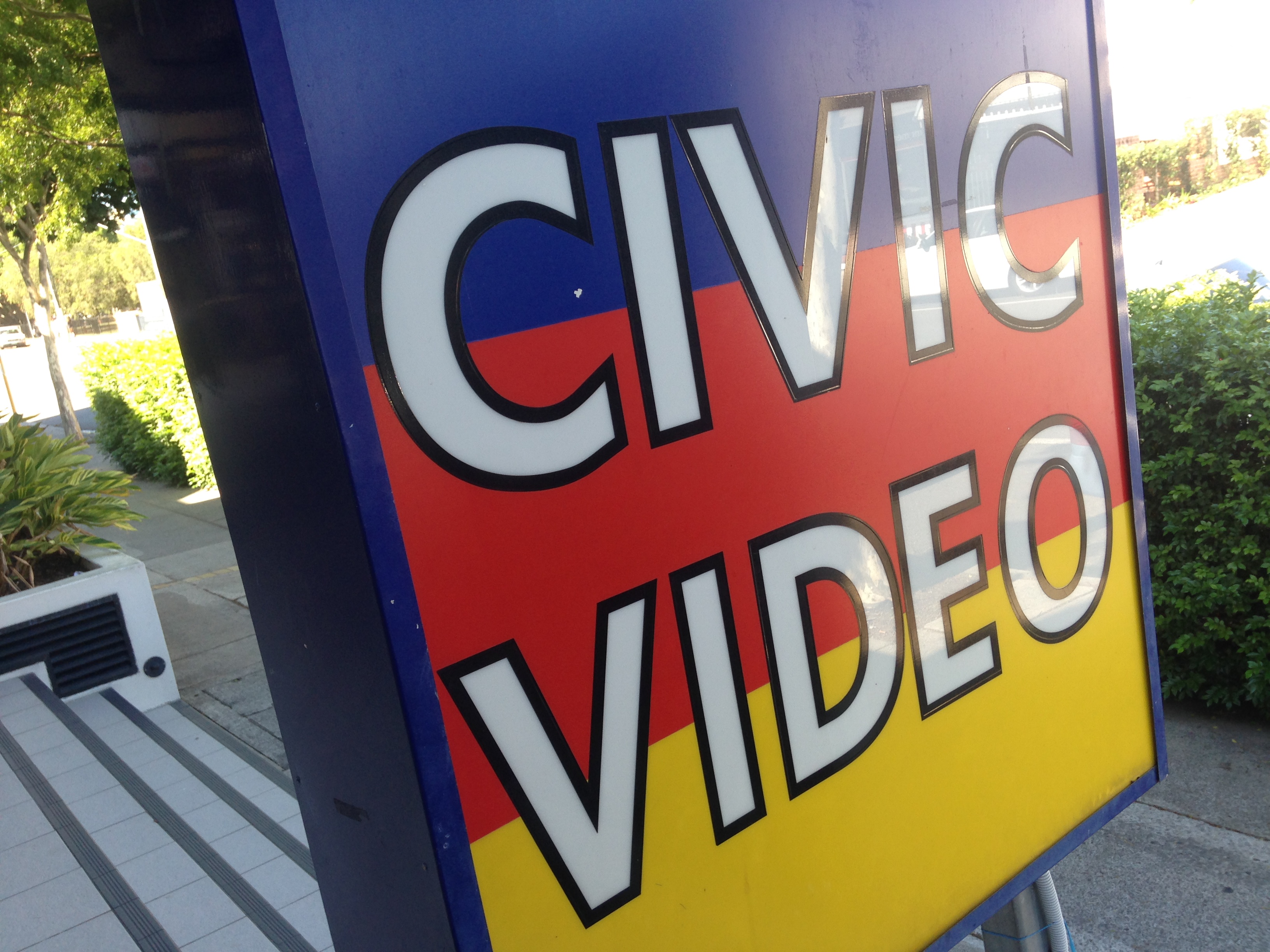
The Poetry Object is an annual competition open to school students in Years 3–10. Last year, Red Room asked me to contribute my own talismanic poem to the project — and the object I chose was my local Civic Video. In Red Room’s words: “‘Civic Duty‘ is a restrained detailing of the slow death of video rental stores: a period business that may one day be remembered with nostalgia, like milk-bars and roller-discos.”

Vale Civic Video Rosalie

Our Skype workshops were brief, with 20 minutes per class, so I framed them as conversations. What did the students already know? What did they want to discover? The young women of Wilderness School, it turns out, are pretty clued up when it comes to the mechanics of poetry, so together we unpacked ‘Civic Duty’ — its rhythms and devices — and discussed how they might approach their own poems.

There were plenty of blank faces when I explained my grief at the recent loss of Civic Video Rosalie. It’s enough to make a gal feel old. But it was otherwise wonderful to engage with these students, whose planned poetic talismans range from shells to farmsteads. Their knowledge and enthusiasm about poetry — and their wit — might surprise the bean-counters currently stripping Australian arts and education funding.

Photo by Ann Rooney (Wilderness School)

The workshop was organised by Ann Rooney, an English teacher at Wilderness School, who wanted the girls to learn that reading and writing poetry are skills that can be learned. I’m with Ann on this. Poetry has a mysticism, sure — as Prof. Dumbledore put it: “Words are, in my not-so-humble opinion, our most inexhaustible source of magic.” But viewing poetry as a craft gives writers control over their word-magic. To give students — especially young women — tools with which to hone their communication and art-making is to empower them.

For me, poetry is a process of fearless editing in the pursuit of what Sylvia Plath called “a closed fist” — poetry as a contained potential energy: a fistful of lightning. I hope I passed even a little of that idea on last Wednesday. And I look forward to reading their object-poems!

Only WA and NT to go before I’ve poeted in all states of Australia. Workin’ on it.

The Poetry Object is open to students in Years 3–10 in Australia and New Zealand. The Red Room Company has a wealth of poetry resources available online for teachers and students. Get in on it.

Salt & Bone: A Blog Hop

Ms Kaitlyn Plyley, poet and comedian extraordinaire (also generally a great gal and my true Harry Potter Scene It! adversary), invited me along to her bloggy sock-hop. This is a selfie-interview — a chance to reflect on (and, perhaps, pitch) a current project; then, I tag a few more bloggers and send the blog hop on its way.

  1. What are you working on at the moment?
    My big announcement for 2014 is that Walleah Press will soon turn my manuscript, Salt and Bone, into a living, breathing, spine-y paper thing. We’re hoping to launch the book around July. I’ve finally stopped fiddling with punctuation and order-of-poems. (Ralph at Walleah has been very patient with me.) Bettina Marson is working away at the cover design, which — in keeping with the books Brisbaniness — will feature possums, curlews, stilts and mud. (You can see Bettina’s designs for my 2009 chapbook in her ink portfolio.)
  2. How do you think your work differs from that of other writers in your genre?
    I like to think — I hope, at least — that I’ve developed a distinct poetic voice: a Brisbane voice, concise-but-not-sparse, flexible enough for both page and stage. That would be the answer as far as poetry as concerned. As regards nonfiction, I hope my writing is getting more precise and, if I’m lucky, funnier.
  3. Why do you write what you write?
    I write poetry because choosing the lowest-paying category of arts (and in this budget climate) just seemed like fun! Jokes aside, I find poetry compelling as a craft that’s impossible to perfect; each poem is an impossible puzzle. I can work on them infinitely, chipping away. It’s satisfying in an it’ll-never-be-satisfying sense. I also write poetry because a) I enjoy reading poetry and b) it’s short. Creative nonfiction gives me space to research and mull over and really get my teeth into a topic. It’s very different from writing poetry, and that’s good.
  4. What’s your writing process, and how does it work?
    I write a terrible first draft very quickly and then I spend millennia editing, fiddling, editing, proofing and putting-the-final-touches-on. This usually happens in the wee small hours, in bed with a good notebook.

Enough navel-gazing! Thank you for reading. Up next:

Michael Gerard Bauer: Michael is one of my favourite children’s/YA writers. His books are currently sold in over 20 countries including the USA and UK and translated into nine languages.

Sarah Gory: Sarah directs the Queensland Poetry Festival. Her blog, Highgate Hill Kitchen, started “as a way to document my cooking ventures, stay motivated to keep on trying new things in the kitchen, and share my daily stories.”

Eleanor JacksonEleanor is a performance poet who casts spells with her silky voice. Her most recent work, Now You See Me, was an interactive installation exploring the theme of queer visibility in visual art.

While we’re here, here’s a newish poem in Cordite’s No Theme III.

YOOF ARTS NEWS

I nearly called this YOOF ARTZ NYOOZ and I’m sorry. Maybe it should have been “They Have It Coming”. Anyway. It’s been a fortnight of arts-work by the young and the restless. This is definitely more of a discussion than a series of reviews. I especially welcome input from others who’ve seen or are involved in these shows.

BRISBANE (A DOING WORD)

Brisbane (a doing word)

Vena Cava has outgrown QUT’s Woodward Theatre; the student theatre company launches its new season in the Judith Wright Centre’s intimate Shopfront space. Here, we meet Matty (Patrick Hayes) and his share-housing frenemies, negotiating their place and purpose as 20-somethings in Brisbane. This coming-of-age story unfolds in pieces, benefiting from writer David Burton’s structural experimentation.

Burton’s characters are painfully relatable but never sterotypes. Claire Christian directs a strong cast; we’ve all lived or studied with these eager, energetic, argumentative people. We’ve probably been them. Overall, a little more polish and restraint will allow Brisbane (a doing word) to deftly handle the sensitive topics it tackles without losing its sense of absurd humour.

BRISBANE (A DOING WORD) ran at the Judith Wright Centre from 20 to 22 March 2014.

PERSPECTIVE/WOOLF PACK

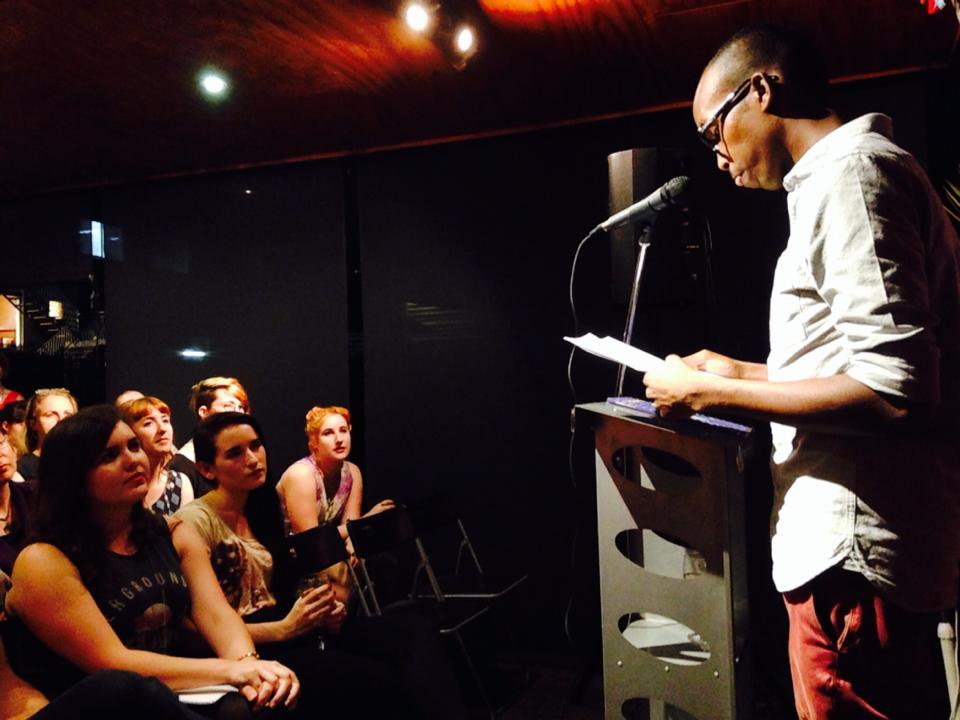
Khalid Warsame at Brisbane's VOICEWORKS Launch

Express Media (or its Queensland representative … me) launched Voiceworks #96, the Perspective issue, at Avid Reader. Voiceworks Mag publishes and offers professional development of the work of Australian writers under 25. This was such a great night with superb readers (pictured: Khalid Warsame). Avid put on the ritz for us — what a wonderful venue. Wine all round! We also launched Woolf Pack, a new feminist zine edited by super-cool Brisbane ladies. Good times.

VOICEWORKS and WOOLF PACK launched at Avid Reader on 28 March 2014.

HOMOS IN KIMONOS

Homos in Kimonos

James Halloran and Will Hannagan’s double-bill cabaret (Melbourne Festival Comedy) has come under fire this week regarding its title, which some feel appropriates Japanese culture in a way that is racist. I’m hesitant to weigh in personally — as a white person I realise my privilege means I have blind spots — but I felt the creative team gave a measured, respectful public response in which they apologised and clarified their intentions. It was disappointing to see uncritical responses on both sides of the fence (personal attacks on the young performers and, on the flipside, tiresome attacks on “the PC brigade”).

I rarely feel qualified to comment, but I think there’s space right now in Australia for lots of context-based, critical discussion on cultural intersection in art. I hope that the show’s run stimulates more thoughtful, respectful discussion and fewer facebook shitstorms.

HOMOS IN KIMONOS runs at Melbourne Comedy Festival until 13 April 2014.

BOY&GIRL

Boy&Girl by Oscar Theatre Company

Oscar Theatre Company presents “a steamy cabaret of musical theatre, contemporary and pop where gender is bent and rules are broken” at Brisbane Powerhouse, after a season at Lightspace. Boy&Girl features 25 talented and diverse cast members with a Broadway/contemporary jazz vibe. Jason Glenwright’s moody lighting sets the right tone for a trip down the Weimar rabbit hole.

Now, I can’t call these thoughts a review, as I did not stay for the full show. For me, the highlight of the first half was a 40s wartime swing rendition of “Call Me Maybe” by three charismatic male performers, followed by an emotive solo covering Rizzo’s “That’s the Worst Thing I Could Do” from Grease. Overall, though, Boy&Girl only flirted with the idea of gender-bending: pronouns were swapped, sure, and the boys (but, curiously, not really the girls) dabbled in drag. The jokes were about as cheap as the lingerie. All up, a pretty conservative affair, with the cast unable to nail the sense of sexy-grotesque integral, in my opinion, to queered cabaret.

But none of this would be a fair reason to walk out. Generally, I think it’s pretty poor form to leave a show’s opening night midway. However, just before the interval, 10 men (plus the male host and four men in the onstage band) performed Chicago’s “Cell Block Tango”. This is a song that deliberately subverts language used against female victims of intimate and sexual violence; its power, humour and sense of the uncanny succeeds because, in the context of the song, women have what is normally masculine power. In Boy&Girl, “Cell Block Tango” becomes a deeply unsettling song about domestic violence. In Australia, where one woman a week is murdered by an intimate partner, loosely “gender-bending” the song puts the power back in the hands of those who already have it. I left because I couldn’t sit with an audience that found that funny.

BOY&GIRL runs at the Visy Theatre at Brisbane Powerhouse until 19 April 2014.

Voiceworks launch: Brisbane edition


A rare Brisbane Voiceworks shindig — in one week’s time! Helllls yeah! This is editor Kat Muscat‘s and designer Elwyn Murray‘s final issue — and my final spin on the editorial committee — so make sure you come along to raise a toast to the end of an era and the start of a glorious new one. Welcome VW’s new ed, Elizabeth Flux.

Features: VW Perspective contributors James Butler, Sophie Overett, Emily O’GradyKhalid Warsame and Zenobia Frost; John Marsden Prize-winner, Jeremy Poxon; and the launch of new FREE Brisbane femmo zine, WOOLF PACK.

When: 6pm for 6.30pm, Friday 28 March 2014
Where: Avid Reader, West End
Tickets: Bookings essential online or on (07) 3846 3422. $7.50 entry fee includes a free drink.
Share: Invite yo’ friends along via facebook

VW Flashback: Write of Passage

A few issues ago, I wrote an ed-comm-itorial for Voiceworks #93 “Cell”. Voiceworks publishes the work of writers under 25; in a couple of months, I’ll be forced to make my own way in the big world, elderly and alone. Not really — but I have had my last ever things published by VW. Gonna miss ’em. Stumbled across my recentish editorial today, so here’s a flashback. Sorry-not-sorry about the title pun.


Write of Passage 

In writing, as in life, the first cut is the deepest. Baby, I know. My first time was online. On a poetry critique forum. Some punk who didn’t even understand my poem thought they could tell me, the author, how to improve it. Hot damn! That first dose of red ink can sting.

I was sixteen and top of English. I was used to my poetry taking pride of place on my parents’ fridge. Yet someone out there thought my writing could be better. Much better. I’d like to say that was the day I left the comfort of LiveJournal and became a Writer-with-a-capital-W, but in reality I was too busy making my school-friends troll this anonymous butcher who had applied his untrained scalpel to my perfect poem.

First Critique can be a significant and habit-shaping event; it can separate the diarists from the crafters. It’s an experience many of us share—perhaps even an essential writers’ rite: to undergo the painful epiphany that accompanies extreme butthurt in the face of criticism. It didn’t sink in that exact day, but it was a step towards realising that first-drafting is only a small part of writing.

That poem was titled ‘Narcissism and Existential Lust Backstage at the Con’. Seriously. I wrote it while skulking around with my trumpet in the eerie blue lights backstage at the Brisbane Conservatorium, waiting for school band dress rehearsals. Dressed in yellow crepe, I mostly gawked at a hot sound guy who looked enough like an Anne Rice vampire for me.

So I wrote a poem for our sound tech Armand, employing ultra-subtle addiction metaphors because, at sixteen, I was pretty worldly (read: drank Absinthe once):

I can’t shoot up sense
I can’t see my veins
I’m floating in opium blue
there’s no substance abuse
there is only you.

I think I may even have tried to hand-deliver a copy. Bad habits start early.

That First Critique, perhaps, sets writers apart from musicians and sports players. While other kids take piano lessons and go to soccer training, few young-’uns are sent to poetry class or writing lessons. (Start more Dead Poets Societies in schools!) In ice-skating class, the first thing you learn is how to safely fall down—but most young poets, untutored, forge their own ways in cossetted, private notebooks.

Looking back, that critic’s advice was firm, but kind—and asked me questions, rather than directed me or rewrote my work. I had to realise I’d willingly entered a workshop forum where the aim was not so much to showcase as to practise. And one of the best ways to get better as a writer is inform your editing with readers’ feedback.

Of course, the critiqued poem doesn’t exist in a vacuum and neither does the poet’s response. I empathise with each new writer struck with the revelation that Plath and Neruda didn’t just pop those poems out fully formed. The nature of First Crit can bubble-wrap, buoy up, encourage or scar a new writer.

If you, dear reader, are one whose formative First Crit is far in the past, I urge you to think back on that experience and be considerate. But the real trouble is something much more insidious: beyond the boldfaced anonymity of online critique groups, serious peer feedback can be hard to find. Be considerate, but do still be critical. The only feedback worse than ‘You suck’ is ‘Don’t change a thing!’

The poems and stories you’re about to read in this issue have all been edited in collaboration with their authors. Works that didn’t make it in this round will receive feedback, too. Voiceworks is the only publication I know of that does this. Last issue, Chloe Brien discussed the monikers writers instinctually take. I’m a poet, but I think I’m an editor first.

I submitted ‘Narcissism and Existential Lust Backstage at the Con’ to Voiceworks in 2006. It was my first national publication—but more than seeing my name in print, I remember the thrill of working with an editor who knew my poem could be better. If only we’d taken the scalpel to that title.

Voiceworks #93, 2013.