REVIEW: Aurelian

Words: Tahnee Robinson

The stage at Metro Arts feels like a house in storage: draped with muslin and shadows, the shapes suggest but don’t confirm. It’s a fitting scene for what is to come — Aurelian explores the nature of memory and grief, and the way we construct our lives around loss.

Aurelian is the work of Genevieve Trace and a small creative team. Trace describes herself as a multidisciplinary performer, and Aurelian certainly samples from a variety of creative forms. The performance uses film, audio samples, physical theatre, live recording and a collection of narratives to form a pastiche of recollection and identity. Opening with a monologue that verges on prose-poetry, we are awakened to the anxiety of grief; performer Erica Fields repeats, with increasing desperation, a mantra of sorts: “But I have to work these things in order.” This is the panic of the bereaved, sorting through memories distorted with obsessive recollection.

The performance takes us through a series of stories, interview-style. Fields, shadowed by co-performer Trace, nods and smiles and pauses, responding to a series of prompts and questions that are unspoken. She has captured the glossy, overwrought joy of the bereaved perfectly. We are sometimes not sure who she is — widow, grandchild, neighbour — but all of these characters speak with the earnest ardor of people trying to do their lost loved ones justice in the retelling. And these stories are real, sourced from people in Trace’s hometown of Ayr in northern Queensland. Amongst them seems to be Trace herself, or her character, trying to understand her own grief.

Aurelian

Around the halfway mark, the narratives speed up and begin to fragment. Mike Willmett’s sound design follows the theme: the soundscape squeaks and glitches with the failing of the characters’ recollections. The climax, an attempt to reconcile the irreconcilable, is a wall of noise and flashing lights. Whitney Eglington’s lighting design makes clever use of the abstract set. Images are projected onto unlikely surfaces and lights appear behind screens to cast unexpected shadows and figures. The set is mostly made up of a series of trapezoidal constructions in various sizes. These function as seats, benches, projector screens and, at one point, a washing basket. They’re unobtrusive, and Trace and Field can move them about the stage with minimal interference.

All of this combined is Aurelian’s weak point. In evoking the overwhelming incomprehensibility of grief the show has overreached a little. There’s just too much here, for 60 minutes worth of performance. I can help but wonder if the whole thing would have felt more effective if a couple of the elements had been removed. The concept of the supernatural, hinted at during the opening, is explored more directly here. This is perhaps a natural inclusion in a discussion of death and loss, but it feels out of place amongst so much musing on identity and memory. The concept, executed with lights and a semi-transparent backdrop, and clever use of the two performers, is visually effective. But feels like a bridge too far — one thing too many to think about in a performance that is already quite intense.

Aurelian doesn’t really conclude — there isn’t even a curtain call. And that’s thematically consistent. There’s no answer to grief, no cure or method for dealing with it and no way to manage the wrinkling and slippage of our memories.

AURELIAN played at Metro Arts from 7 to 15 September as part of Brisbane Festival.

TAHNEE ROBINSON is a Brisbane-based writer. She was OffStreet Press’s visual arts, film and fashion editor.

INTERVIEW: Short + Sweet Theatre Festival

SHORT+SWEET THEATRE FESTIVAL, now a global affair, returns to Brisbane with a program of snappy plays. I caught up with SEAN DENNEHY, festival director, for a short+sweet Q&A.

ZF: S+S Festival brings us 40 different plays from 40 different writers. How short is the shortest?
SD: In real time, about 6 and a half minutes. In your mind,it could be a lifetime or the blink of an eye.

ZF: And, of course, which play is the sweetest?
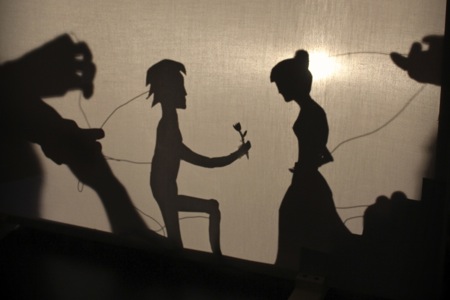
SD: A play that includes the shadows of life and non-human actors has got to be sweet innovation: Jennifer Bismire’s Doll’s House.

ZF: A short novel is a novella and a short short story is flash fiction — invent a fitting new name for the “short play”, if there isn’t one already.
SD: There isn’t and i’m going to say bite-size.

ZF: Tell me a short, sweet or surprising fact about one of the artists you’ve been working with for the festival.
SD: Caterina Hibberd directed for the mainstage Queensland Theatre Company season in 2012.

ZF: Short+Sweet welcomes a number of independent companies this year. What do they bring to the festival?
SD: Independent theatre companies are the lifeblood of innovation and experimentation in the performing arts. They bring an edge to Short+Sweet as they try new ways to wow their audiences

Short+Sweet

ZF: From drama to comedy to puppetry, is there one genre that you feel best fits the short form?
SD: Each genre brings its own challenges; to make the audience care about the characters in a 10-minute drama requires total engagement from the writer, director and actors. Comedy can be so subjective — the three creatives involved have to commit to perfect comedic timing. So no there is no one genre.

ZF: What’s the best thing about an evening of short plays?
SD: If you don’t like one play, you only have 10 minutes to wait for the next one. It’s also like having all your senses bombarded at once!

ZF: What’s the biggest challenge in directing a festival of little plays?
SD: The number of artists involved! A community event like this can involve up to 200 artists!

ZF: What about Queensland talent does S+S represent for you?
SD: It represents the wealth and depth of talent in Qld — talent that can be world-class, or talent that is happy to stay and enrich this state from the inside out

ZF: If S+S Festival were a dessert, what would it be?
SD:
de8f33b1-26bc-4d43-a77c-aea61e6d395e

SHORT+SWEET FESTIVAL runs at QUT’s The Loft from 18 to 25 Aug. If you live down the coast or want to start your bite-sized theatre feast early, S+S Gold Coast runs at the Arts Centre Gold Coast from 30 Jul to 3 Aug.

REVIEW: Sons of Sin

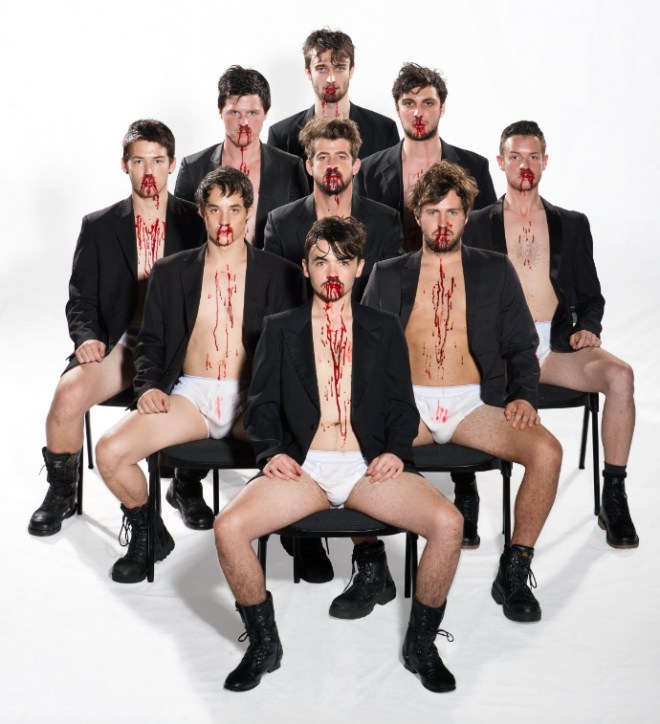
A bathtub. Giant playing cards. Splattered blood. Casting a circle around these few props, nine bearded young men crack open bottles of beer. In turn, the audience circles the party: we are at once voyeurs, witnesses, accusers, accomplices and confidants. 

The Danger Ensemble vows to “question what theatre is and re-vision it for the future.” Whatever your take on this unusual production, you’ve gotta hand it to ‘em — the ensemble’s visions are bold, brave and compelling.

Sons of Sin, directed by Steven Mitchell Wright, takes the form of a game. The cards lie facedown before the performers; which ones they draw, in turn, will determine the shape of the show. One card grants the audience permission to name any dare; another demands the creation of a new group rule or the confession of a secret; yet another signals the unfolding of a surreal tableau.

No two shows are the same, and it’s likely you’ll see things you’ve never seen in a theatre space before. You might even be the one to suggest them.

Sons of Sin

For the nine actors (Alex Fowler, William Horan, Thomas Hutchins, Aaron Wilson, Ron Seeto, Chris Farrell, Samuel Schoessow, Charlie Schache and Stephen Quinn), Sons of Sin is an incredibly demanding show. It’s luck of the draw what they’ll need to perform next, from prepared monologue to improvised violence to nude scenes. The cast’s chemistry holds this show together; they seem to possess a hive mind. Collectively, they possess a burning, restless energy that makes it hard to tell one from another.

Sons of Sin explores the condition of the modern “lost boy” — risk-taking 20-somethings with energy to burn, anger to bottle and insecurities to drown. There’s no overarching narrative; rather, the characters expose more of themselves, piece by piece, through the game.

The show covers a lot of ground, but its chance nature prevents Sons of Sin from becoming an exhaustive survey of masculinity — good move. That said, the cast avoid some fantastic opportunities for development; when an audience member asks, “You’re white, male and middle class — why are you so angry?” during a session of “truth”, the question is fobbed off as boring, and we return to questions about masturbation, sharting, etc.

It’s an interesting work to compare with Daniel Santangeli and Genevieve Trace’s Room 328 (Metro Arts, Brisbane Powerhouse) and Sven Swenson’s The Truth About Kookaburras — both Brisbane productions concerning Lost Boys. (Incidentally, Brisbane stages have seen a lot of cock in the last few years. Just pointing that out.) In style, Sons of Sin is closest to Room 328, but in tone it is much more intimidating. The sons’ power dwells, tossing and turning, in their unpredictability.

I admit I’m immediately won over by any show that invites me in. In an immersive production, it can be just as interesting to watch the audience as the performers. You’ll speak with, drink with and probably touch these men, and it’s impossible not to be absorbed into their chaos. A warning, though: wear clothes you don’t mind getting wet or even stained. Fluids will fly. (Funnily enough, I had a glass of wine spilled over me not by a performer, but by a fellow audience member. Oh, well.) And do be aware that Sons of Sin is confronting and changeable.

By Z. Frost

The Judith Wright Centre has gutted and transformed its main theatre space for this show. For anyone who regularly visits the Judy, it’s aptly disorienting. The JWC website states that Sons of Sin may run for anywhere between 90 and 110 minutes. We got more bang for our buck (or review comps, yes); opening night’s running time, interval included, was closer to 150 minutes.

In the second half, the incredible demands on the cast start to show; the performers’ energy begins to waver, and so does ours — especially as motifs repeat, by chance. (After nearly two and a half hours of standing, following, ducking and dancing, the audience swarms from the theatre towards somewhere to sit down.)

Sons of Sin works best in its scenes of action — whether spontaneous or choreographed — as well as moments of reflection. The show suffers from dense, shouted monologues that cause the game to lag. The Sons already show their sins so well, there’s often no need to tell. The inclusion of a verbose climax suggests that Wright and co-devisors don’t trust the game to speak for itself. It does.

Sons of Sin holds up a broken mirror to a culture of casual violence. If you let them, The Danger Ensemble will take you on a wild, exhausting, worthy ride. Wear a raincoat. Pick your poison. Think up some wicked dares.

SONS OF SIN runs at the Judith Wright Centre until 25 May, 2013.

Anywhere Fest: Ma Ma Ma Mad

Merlynn Tong (Zen Zen Zo) has microphone in hand for her one-woman spectacular, MA MA MA MAD. Her other hand is outstretched to you, her audience. Enter Cyber City.

Q. Describe your show/s in under 25 words.
A. A one-woman dark-comedy offering set in a Karaoke bar that dives into the landscape of my mother’s heart as she enters the realm of suicide.

Q. Anywhere Festival is about making art everywhere. What makes your venue unique?
A. My venue (2002 Cyber City) is perfectly insane. As you enter the space, an Asian lady surrounded by DVDs and VCDs stares at you. Then the aromas of Chinese food awaken your nostrils. As ginger and garlic make their greeting to your senses, the melodious Chinese language and repetitive sounds of the arcade machines tempt your ears, beckoning you closer. Right at the end of the venue, in a tiny Karaoke room fit for only 20, we begin our journey. Gosh, I love this space! So central in the Valley, when I first stepped in 2002 Cyber City, it was like discovering a playground in my own backyard.

Merlynn Tong

Q. If your show were a new My Little Pony, what would it look like? What would its superpower be?
A. I have never watched My Little Pony before (tsk tsk Singapore!). [It’s a show, now? I must be stuck in the 90s. — Ed.] But I reckon this should have been on my TV screen when I was a kid.

Q. What’s your favourite karaoke standby?
A. Absolutely have to sing “Silent All This Years” by Tori Amos! I just have to add that my mother’s standby is “Yesterday Once More” — I’ve heard her sing this a million times when I was growing up. Her character in my show seduces the whole audience to sing this song with her!
MA MA MA MAD plays at 2002 Cyber City, Fortitude Valley, From 16 to 18 May, 2013. Anywhere Festival.

REVIEW: The Nightingale and the Rose (Anywhere Fest)

Directorial team Jennifer Bismire (live production, puppetry and design), Belinda McCulloch (film) and Richard Grantham (music) transform Oscar Wilde’s tale of “love perfected through death” into a multimedia performance piece. Published in 1888, Wilde’s short story tells of nightingale’s sacrifice for a young student in need of a red rose to give his beloved. The parable unfolds through puppetry, text, film and music across seven screens in the Powerhouse Labyrinth and Ruins.

Let’s get any biases out of the way: I know key members of the team, and very much respect their work. (After a while, it’s hard not to know at least someone in any given Brisbane show.) Still, I trust them to trust me to review honestly.

There’s something mystical about shadow puppets. These articulated silhouettes are deftly handled by a large cast of puppeteers (Caitlin Marie Adie, Emily Bruce, Perie Essex, Eloise Maree, Lauren Neilson, Helen Stephens and Sami Van Barneveld).

The garden, across three screens, takes centre stage. At the far left, subtitles tell the Nightingale’s tragic story. On the other side, a live-action film plays out philosophical conversations between the Student and his professors. It’s a very different way to view a show; The Nightingale and the Rose is part-theatre, part-cinema and part-art installation, with the mood of a silent film. You don’t want to miss a thing — but there’s a lot to follow, and missing some (at least from the front row) is inevitable.

The Nightingale and the Rose

The filmed portion introduces new characters to Wilde’s story: two professors who consider the Nightingale’s plight as a thought experiment and guide their lovelorn Student. Wilde’s narration is split between these three figures. With regard to adapting a seven-page story for an hour-long show, it’s a clever idea; however, John Grey, Michael Croome and Tim Gollan’s performances feel unprepared and their dialogue lacks the conviction to transcend its role as a collection of leftover witticisms.

For the show, Grantham has arranged compositions based on works by Lili Boulanger and Olivier Messianen. His evocative performance transfixes, transporting us from the Powerhouse Ruins into the Nightingale’s garden. Still, the presence of the outside world is part of what makes Anywhere Festival different — you can’t stop passers-by chattering, nearby meditators chanting or car headlights flashing, so you may as well embrace the ambient soundtrack. I admired the cast, in particular, as they pressed on during an outburst from a gentleman who verbally abused an usher. (Yes, it’s a ticketed event in a public space — deal with it.)

It’s brave to stage this quiet, thoughtful piece outside of a traditional theatre space. Interestingly, some audience members behave more like cinemagoers: some chat while others even come and go. In last week’s interview, Bismire raised a pertinent question: “How many forms do we have to saturate a contemporary audience with to get across the same story?” Bismire, McCulloch and Grantham’s production is beautiful, but in the attempt to appeal to all types of viewers the story’s simplicity is sacrificed — along with the Nightingale.

The Nightingale and the Rose runs in the Powerhouse Labyrinth and Ruins from 9 to 18 May, 2013. Anywhere Fest.

REVIEW: My Struggle (Anywhere Fest)

My Struggle: The Life and Times of an Individ
(In a World Full of Hipsters)

Reviewed by Nerissa Rowan, May 8.
Presented as part of the 2013 Anywhere Theatre Festival.

You may think hipsters are a little crazy, rather intimidating or totes groovy. Whatever your perspective, this sub-cultural satire is unlikely to change it, but it will make you laugh.

Melding film, dance, music and impressive bad facial hair, My Struggle: The Life and Times of an Individ (In a World Full of Hipsters) takes three bored soldiers into a parallel universe where their best friend has become an art school hipster. In the hope of being able to get home, they help him on his quest to snag the girl of his dreams.

So it’s a love story, right? Not so much. It’s mainly a satire, looking at the price of cool, the dangers of expectations and the pitfalls of conforming to non-conformity. Or maybe that’s not what it was about and I wasn’t cool enough to work it out. Whatevs.

There are a few intense moments which may take you by surprise to add depth to what would otherwise be a light and enjoyable comedy. It’s not difficult to see the parallels being drawn here, yet I let my guard down while giggling at the stereotypes, and the menace caught me almost unawares.

The talented cast make full use of the space. Most of the action takes place on the bare stage, with the curved white wall of this photography studio creating the perfect canvas for projecting the filmed action and backdrops. But the actors move through the audience, up the stairs and into the bar on the upper level.  By the end of the piece all of us, from those perched on the bar stools to those on our low slung chairs closer to the main action, become part of proceedings.

It’s worth noting — as many people were caught out by it — that the 75 minute running time listed on the website does not include an interval. Starting just after 8, the show ended at 9:50pm. This is particularly important if you’re catching public transport.

So squeeze into your tight jeans, slip on your ironic shirt and lace up your vintage sneakers for a fun and thought provoking night. Although you might want to see this one before it becomes cool, you’re too late.

I give it a big green tick.

My Struggle: The Life and Times of an Individual (In a World Full of Hipsters) runs at SYC Studios, 37 Manilla St, East Brisbane from 8 to 11 May, 2013.

Nerissa Rowan is a poet, performer, Arts Hub reviewer, and former OffStreet PressGang member. 

Anywhere Fest: The Travelling Sisters Let Loose

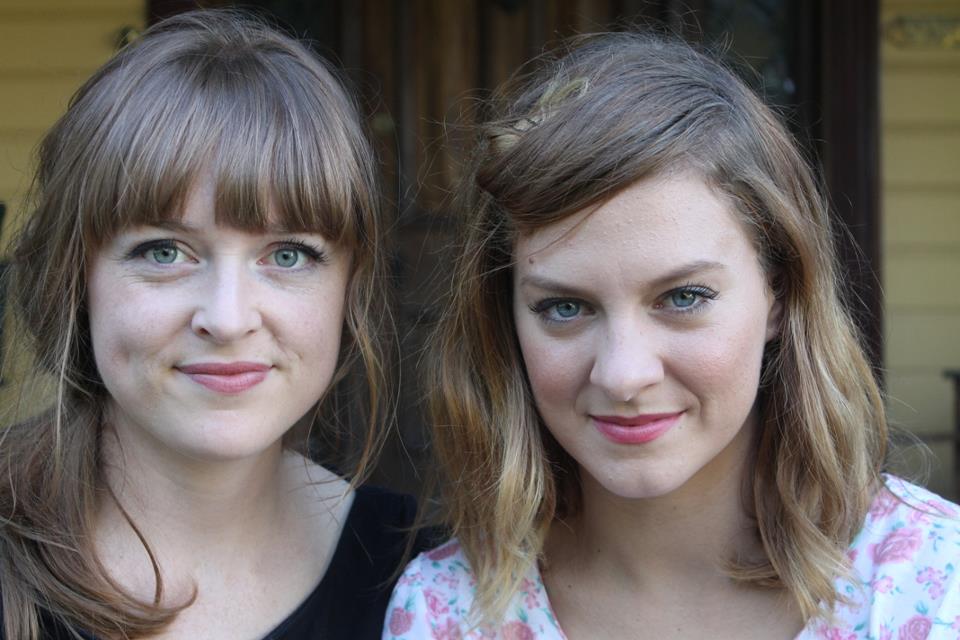
Lucy Fox and Ell Sachs are ready to take you on a metaphorical adventure through Kelvin Grove’s mysterious ways and abandoned homes in The Travelling Sisters Let Loose — a “cabaret of life’s quests and questions.”

Q. Describe your show/s in under 25 words.
A. Haunting, dark, awkward and funny, The Travelling Sisters might push some buttons but their honesty is transfixing within the walls of the fire-lit living room.

Q. Anywhere Festival is about making art everywhere. What makes your venue unique?
A. Its a place that most people wouldn’t even realise still exists in the inner-city suburbs of Brisbane. It takes you back in time. Also, we want our audience to feel more like they are sitting in a friend’s living room. The theme is comfort, stories and sharing. The audience is free to shuffle around to get a different view, although they may just become transfixed by the historical aliveness of the house’s nooks and crannies.

The Travelling Sisters

Q. If your show were a new My Little Pony, what would it look like? What would its superpower be?
A. Melted Milton. It would be a twisted, distorted thing of beauty and its superpower would be the power of flatulence. Flatulence is both a weapon and a power source for flying.

Q. The Travelling Sisters Let Loose starts at a “meeting place” in Kelvin Grove — is this show one of exploration and adventure? Tell me more!
A. Definitely! But more in the metaphorical sense. The exploration and adventure takes place in the warmth of a living room through stories and songs. It is not a walking tour around the back-streets of Kelvin Grove. Although that’s not a bad idea either — maybe next year!?

To join The Travelling Sisters  as they let loose, meet at Cnr Ballymore & Dunsmore St, Kelvin Grove. Runs from 8 to 19 May, 2013.

Anywhere Fest: Overexposed!

Rosie Peaches, a multitalented belle of Brisbane Arts, runs popular cabaret-burlesque evenings at The Hideaway. For Anywhere Fest, she brings her one-woman cabaret to the Bell Brothers Building in Fortitude Valley.

Q. Describe your show/s in under 25 words.
A. A one-woman cabaret and international collaboration revealing the ridiculous in love and relationships. Or “The Failed Love Life of a 20-Something Brisbane Girl”.

Q. Anywhere Festival is about making art everywhere. What makes your venue unique?
A. Our venue is a foyer in a 1920s heritage-listed building, which really sets the scene of a romantic, vintage cabaret. We’re really using the space as it is, projecting video onto the walls, hanging lights from the balconettes and using the chandelier and wood panelling as part of our set design. Oh, and it’s opposite an adult store, so you can pick up something after the show … maybe?

Overexposed!

Q. If your show were a new My Little Pony, what would it look like? What would its superpower be?
It would be wearing a cardigan and drinking a glass of gin and tonic. Its superpower would be similar to Cupid’s: makin’ love and breakin’ hearts all with a nonchalant flick of the wrist [or hoof! — ed.].

Q. Tell us the story of your most awkward date, first or otherwise.
My most awkward date was … there’ve been so many! The one who moved to Australia after a summer fling in Europe, the ex who apologised at the end of the date for breaking up with me three years prior, the one where an ex arrived to crash our date, the boy who told me he’d take me on an adventure only to regale me with stories of his pet chickens…

Overexposed! runs in the foyer of the Bell Bros. Building from 10 to 19 May, 2013.

Anywhere Fest: The Nightingale and the Rose

For Anywhere Fest, directorial team Jennifer Bismire, Belinda McCulloch (film) and Richard Grantham (music) will stage Oscar Wilde’s The Nightingale and the Rose in the Powerhouse Labyrinth. I asked Ms Bismire a few questions about their Wilde adaptation.

Q. Describe your show in under 25 words.
A. Three artists across film, music and shadow-puppetry investigate Oscar Wilde’s parable of love versus knowledge amongst the historic ruins of The Brisbane Powerhouse.

Q. Anywhere Festival is about making art everywhere. What makes your venue unique?
A. The old Powerhouse ruins have been a perfect venue for us. A big part of this show is the idea that the new can support, develop and bring life to the old, rather than simply replacing it. The Brisbane Powerhouse as a whole works alongside this ethos very closely, but the outdoor space has this incredible sense of the old, the new and the natural colliding — as well as an extremely intimate feeling for such an open space. We would love audiences to feel surrounded by nature, art, new technology and history whilst still feeling as thought they’re sitting cross-legged, watching a show on their living room floor.

The Nightingale and the Rose

Q. If you could stage your show anywhere in time and space (after the Powerhouse, of course), where/when would you choose?
A. Against the wall of a crumbling cottage in a grumpy elderly forest — the sort of place that time forgets. Either there or in my living room when I was six.

Q. This show has everything, from shadow puppetry to a live soundtrack from Richard Grantham. What do you think Oscar would have thought of the atmosphere you create for his parable?
A. When Oscar wrote this story, the full power and meaning of the Nightingale’s sacrifice, the discussion of love versus power, art versus intellect, was heard through his words alone. 125 years later,  audiences’ attention spans and response to storytelling have altered and developed (though you could argue for the worst).
As a group we’ve been fascinated by how many forms we have to saturate a contemporary audience with to get across the same story of a little bird and her love, which Oscar managed so powerfully with his words alone.
He once said, “I regard the theatre as the greatest of all art forms, the most immediate way in which a human being can share with another the sense of what it is to be a human being.” I’d hope he might see that sense of humanity — and his original intentions — in our piece … though depending who he’s sitting next to he might get distracted by the freedoms of our modern society … or think we’re all twats.

The Nightingale and the Rose runs in the Brisbane Powerhouse Labyrinth and Ruins from 9 to 18 May, 2013.

REVIEW: Frankenstein

Fractal Theatre reanimates the Gothic horror in a new adaptation of Mary Shelley’s Frankenstein, playing at Brisbane’s beloved Arts Theatre.

Inside the theatre, Chancie Jessop’s design is immediately striking, transformed by Geoff Squires’ lighting from arctic wilderness to velvet-draped living room, from graveyard to dense forest. The repeated motif of da Vinci’s Vitruvian Man is a fitting tip of the hat to Frankenstein as an early — if not the first — science fiction novel.

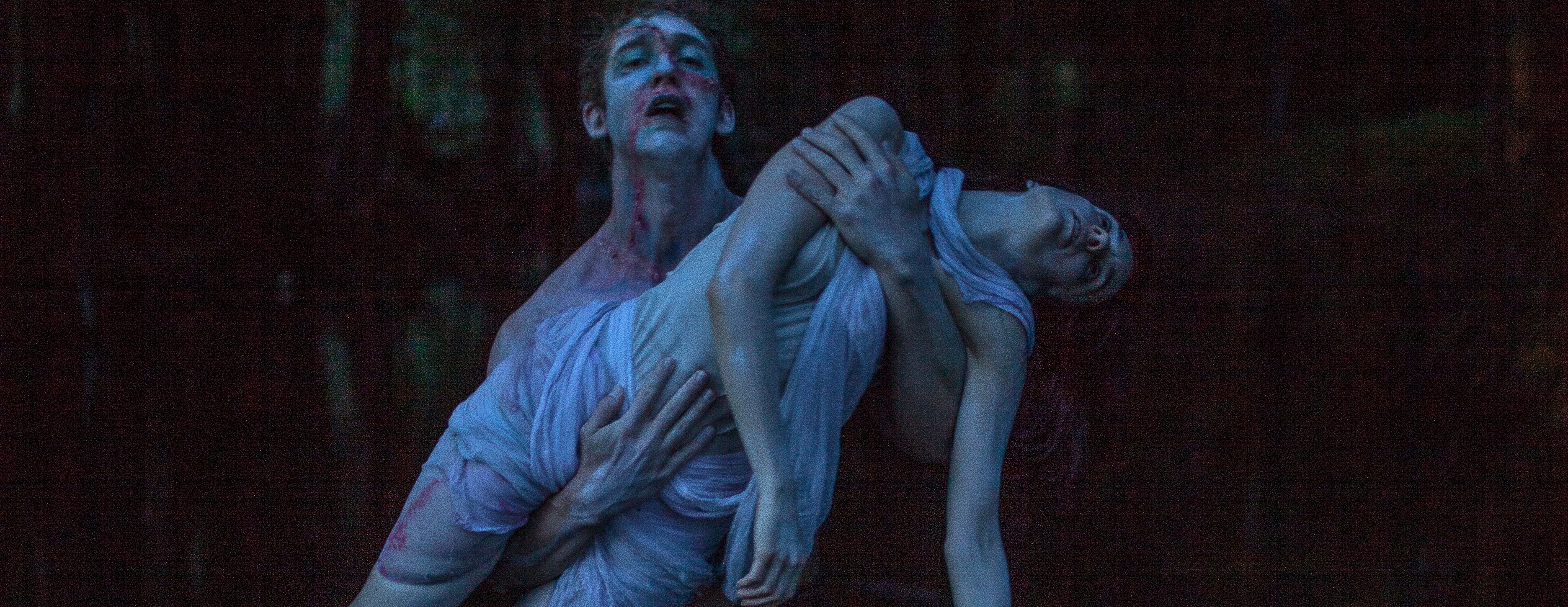
Brenna Lee-Cooney directs a strong cast in a production that perfectly captures the atmosphere of the English Gothic novel, in all its ruined finery. Coached in movement by Brian Lucas, the cast at once embodies the grotesque and the burlesque. Characters tiptoe, jerk and twitch across the stage as if we are really inside a life-size puppet theatre. The result is a mood as funny as it is unsettling. (It occurs to me that BAT would make a wonderful variety cabaret venue.)

Frankenstein

Andrew Lowe takes the lead as Victor Frankenstein, a man troubled by his conscience — and its literal manifestation in his monster (Cameron Hurry). Hurry is superb as the reanimated creature — vulnerable, frightening, alluring, and very human. Thomas Yaxley makes a wonderful comic sidekick of Victor’s friend Clerval. Likewise, Zoe de Plevitz stands out as Victor’s betrothed, the long-suffering Elizabeth. It’s interesting to see Eugene Gilfedder take a back seat, supporting this cast of up-and-coming young things as various paternal archetypes.

Frankenstein skids along at a fast pace, but Lee-Cooney’s adaptation is too loyal to the source text. At two and a half hours, Fractal’s Frankenstein gets bogged down in the dense language of the novel (published in 1818). With the exception of our time with the creature, there are few moments of reflection; to pack the story in, every spare second is crammed with dialogue or narration. One can’t help but feel that a freer approach might have allowed more breathing space, and more time for design and movement to resonate with the audience.

I rather like seeing professional productions play in the low-tech, cosy Arts Theatre. Minor technical issues — such as Eugene Gilfedder’s atmospheric compositions competing with the actors’ un-miked voices — soon even out as we settle into the play. While overlong, Frankenstein delights with its interpretation of the Gothic as spooky melodrama.


Frankenstein plays at Brisbane Arts Theatre until 18 May, 2013, with two midnight performances on 4 and 11 May.

P.S. In the first half, my biro rolled away, never to return. However, broggling about under the seat in front in the interval, we did find two different pens in working order. The Theatre is a generous mistress.