WTF14: Solpadeine Is My Boyfriend

Throughout my life as an arts reviewer, World Theatre Festival at Brisbane Powerhouse has been my favourite Brissie festival. You’ll see work you’d never otherwise have a chance to see — and you’ll never know what to expect from each year’s diverse program. To kick off our series of WTF14 interviews, I asked STEFANIE PREISSNER about bringing her black comedy from Ireland to Australia.
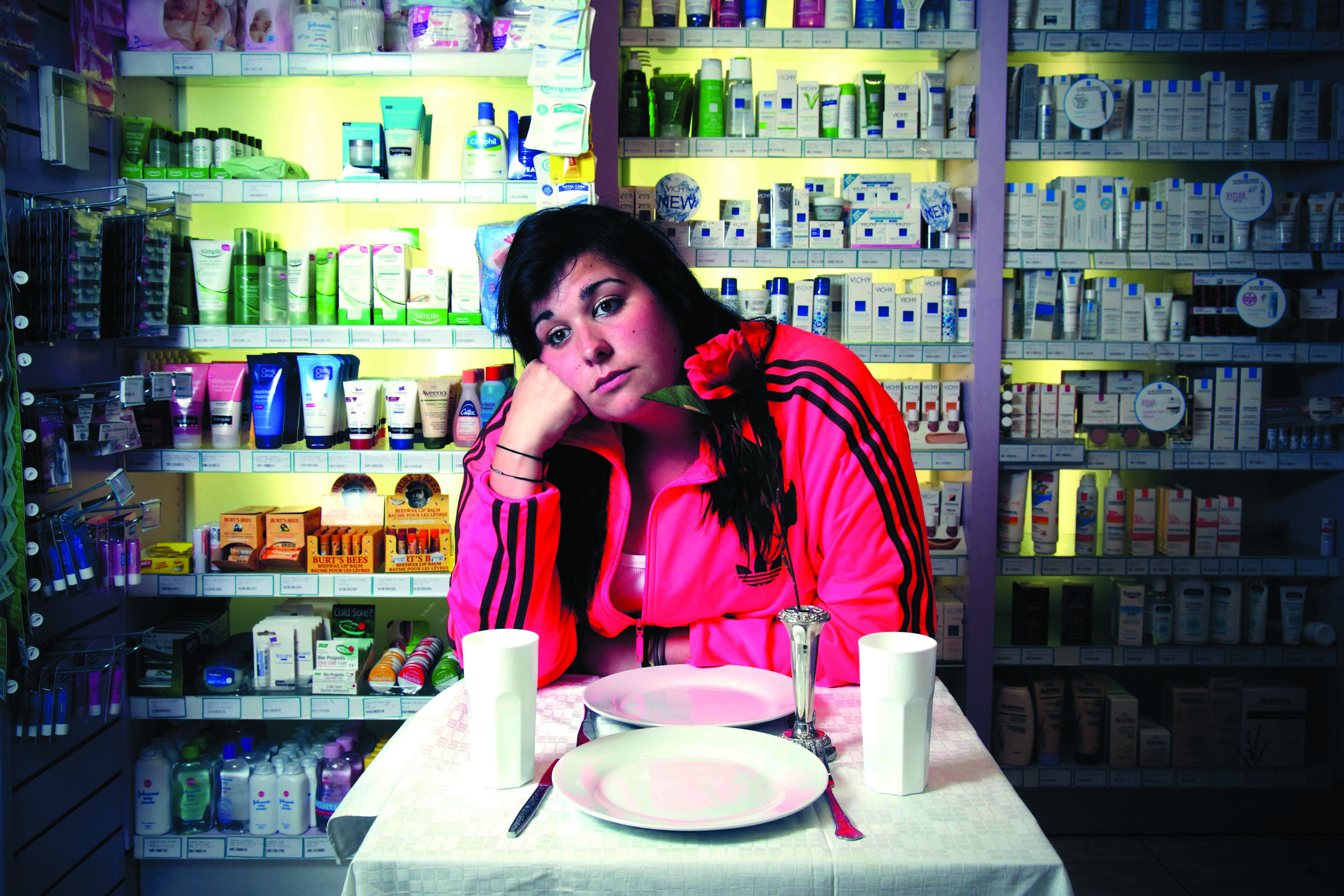
Solpadeine Is My Boyfriend

OFFSTREET: Describe your show in under 25 words.
STEFANIE PREISSNER: It’s an Irish girl’s experience of trying to maintain relationships with people who keep emigrating to Australia. Basically.

OS: I reckon WTF is one of Australia’s most diverse and dynamic festivals. What stands out for you about the festival’s aims?
SP: Having the opportunity to be part of a festival that programmes such varied and diverse work is something that doesn’t happen often. The stakes are high and that’s always scary but I’m excited to stand up there with the best of them.

OS: Have you visited Brisbane before? If no, what are you expecting?
SP: I’m looking forward to seeing a city that I have only heard about on Facebook from my friends who have moved there. It’s a place that is idealised and sensationalised in Ireland as a destination where all the things that are awful about Ireland and the life of an Irish 20-something are answered. Also: Steve Irwin’s zoo.

OS: The entirety of the show is told in verse. What were the benefits and the challenges of incorporating poetry into contemporary theatre?
SP: I think there’s a risk of autobiographical work becoming a bit indulgent or overly sentimental and putting restrictions on the writing opens up a whole other part of my brain and stops me saying the things that I have to re-read through my hands because they are so totally cringe-worthy. So challenging myself to write in verse makes me far more creative. Also on a very basic level, I can write in rhyme and not many people can, so I think it’s a skill worth using, practising and honing.

OS: How do you think the show’s themes will resonate with audiences on the other side of the world?
SP: I’m scared. I’m not sure. There’s a chance that people will be offended at the message of the show. I’m hoping that a discussion might start on Twitter with people’s opinions on it, but I am not expecting everyone to love it or agree with it. It’s a challenging piece.

Start the conversation with Stef on Twitter: @stefpreissner. SOLAPADEINE IS MY BOYFRIEND runs from Feb 12 to 16 at Brisbane Powerhouse for World Theatre Festival.

REVIEW: The Dark Party

Judith Wright Centre of Contemporary Arts, 28 Nov. 2013
Words by Zenobia Frost

We settle in for The Dark Party up the back, led by the (unfounded, it turns out) sensation that the front row might be a dangerous place. After all, I’d watched journalist Dan Nancarrow have an apple chainsawed off his face for Brisbane Times — and would prefer not to follow in his footsteps. The Dirty Brothers (Shep Huntly, The Great Gordo Gamsby and Pat Bath), three “hobo clowns”, are already shuffling into the audience, distributing ping-pong balls. No explanation is given; in fact, The Dirty Brothers will remain silent, except for their occasional stifled cries. For the next hour, we will squirm, squeal and laugh as they injure themselves in the name of circus.

If I ask you to imagine three men dancing over dozens of mousetraps, you might picture chaos. But the Brothers’ triumph is in their deftly controlled performance — perfectly dishevelled, these three are masters of clowning. Their distinct characters, in monochrome clown makeup, simultaneously capture melancholy, mischief and horror. There’s choreographed elegance in their drunken shambling, lit by sepia spotlights. I couldn’t help but imagine Martin Martini’s Bone Palace Orchestra providing a live soundtrack.

THE+DARK+PARTY+hero

It’s hard to describe The Dark Party without spoiling all the surprises. The Brothers play with staples, bear traps, electricity and fire with a jaded sense of self-destruction. These acts are for their amusement, yes, but they’re reproachful as well; we feel sympathy for the one being hurt, whether by himself, his brothers or the world at large. They draw the uncanny out of everyday activities — one’s morning ablutions and the act of putting on a coat are made strange, perhaps because they are so irrelevant to the world these ruined clowns occupy. My +1 observes, as well, several well-placed tips of the hat to Waiting for Godot (which I’ve not seen to confirm) — “as if,” she says after the show, “Vladimir and Estragon had finally given up on waiting and instead had resigned themselves to setting each other on fire for entertainment.”

I’m endlessly glad that the Judith Wright Centre, with its adaptable performance spaces, continues to support concise or unusual acts that might otherwise be relegated to sideshows and fringe festivals. Cunning segues ensure that The Dark Party — only an hour long — is more than the sum of its parts; it deserves time to be a headliner in its own right.

The ping-pong balls return in a wonderful gag that relies on the audience to participate in the Brothers’ denigration. Their violence is effective not because they make it look easy, but the opposite: their reluctance, their silence and their pain are intrinsic to the act.

THEATRE REVIEW: Mary Stuart

Words: Tahnee Robinson

[At the OffStreet Arts blog, we’re launching this cool new idea: late reviews! It’s gonna take off! Belatedly! No, actually, apologies to QSE; this one got lost in the email vaults. Better late than never! — Ed.]

Under the direction of Christina Koch, the Queensland Shakespeare Ensemble has tried something new with their production of Mary Stuart. The parameters of the project are simple, but daunting; they are designed to push the ensemble to their limits and explore the possibilities of pulling a production together very quickly. The actors — with their lines already down — have had one week together to rehearse.

The choice of venue, the University of Queensland’s Geoffrey Rush Drama Studio, and the limited budget initially give the feeling of a high school or university production executed by consummate professionals. Angel Kosch’s costumes are creative and effective, but up close it’s evident that they have been restricted by financial concerns — Johancée Theron’s Queen Elizabeth is, I’m sure, wearing someone’s formal gown from the late 1990s. However, the professionalism of the company quickly overshadows this effect. Belinda Ward’s set is quite basic, too: a set of steps and a throne, and a lot of space for the actors to occupy, making maximum use of the Studio’s multiple stage entrances. The choice to include live music is very wise: the violin, cello and vocals by Imogen Eve and Wayne Jennings adds a level of polish that would be lacking if they had elected to use only prerecorded sounds.

Friedrich Schiller is, perhaps, a strange choice for such a project. Peter Oswald’s Tony-nominated version of the German original is lengthy and complex. However, for a Shakespeare ensemble there is a definite logic to the choice. The play is delivered largely in iambic pentameter, and the scheming political plot contains turns within turns, and layers of betrayal. It feels somewhat like a Shakespearean farce turned terribly serious.

The commitment of the cast, as a whole, is evident; there are a couple of fumbled lines but these are handled so as not to interrupt the flow. Some of the members are veteran Thespians, and it shows: Rob Pensalfini as the Earl of Leicester is the centrepoint of all this political scheming, and he executes each turn with a baffling conviction that is key to the moral ambiguity of the play. We are never quite sure that we understand what Leicester actually wants (other than to survive the narrative with his head attached) and it remains unclear whether he really knows, either. Flloyd Kennedy as Hanna, Mary’s loyal handmaid, is another standout. A guest to the ensemble, Kennedy’s part could be mistaken as decorative; however, she is flawlessly believable, drawing your attention while remaining unobtrusive. Nick James, an apprentice to the company last year and now a member of the core ensemble, plays a commanding Mortimer, who, on Schiller’s spectrum of reason to romanticism, is perhaps the character most driven by passion. James has just come from playing Lysander opposite Rebecca Murphy (Mary, Queen of Scots) for QSE’s A Midsummer Night’s Dream. During the post-performance Q&A session the actors openly speculate as to the effect this may have had on their rapport together for Mary Stuart.

The Q&A, held after every performance, is an intriguing exercise for the audience; it adds a layer to the experience of seeing the production that, under other circumstances, might be unwelcome. Instead you feel like you have become part of an intriguing theatrical experiment. The company is quite open about the potential pros and cons of doing a production this way. For a play as complex as Mary Stuart there are, undoubtedly, both. This method allows a certain rawness that might otherwise be polished off with weeks of rehearsing and workshops, as the actors come to expect the ways in which their counterparts will deliver and move. The downside is the slight suspicion that the actors are, occasionally, unsure about their characters’ motivations. While Schiller and Oswald have built a deliberate level of ambiguity into the play, if the actors are indecisive it can reveal a lack of conviction that’s not always part of the character.

MARY STUART ran at the Geoffrey Rush Drama Studio at the University of Queensland from 2 to 5 October, 2013.

REVIEW: Aurelian

Words: Tahnee Robinson

The stage at Metro Arts feels like a house in storage: draped with muslin and shadows, the shapes suggest but don’t confirm. It’s a fitting scene for what is to come — Aurelian explores the nature of memory and grief, and the way we construct our lives around loss.

Aurelian is the work of Genevieve Trace and a small creative team. Trace describes herself as a multidisciplinary performer, and Aurelian certainly samples from a variety of creative forms. The performance uses film, audio samples, physical theatre, live recording and a collection of narratives to form a pastiche of recollection and identity. Opening with a monologue that verges on prose-poetry, we are awakened to the anxiety of grief; performer Erica Fields repeats, with increasing desperation, a mantra of sorts: “But I have to work these things in order.” This is the panic of the bereaved, sorting through memories distorted with obsessive recollection.

The performance takes us through a series of stories, interview-style. Fields, shadowed by co-performer Trace, nods and smiles and pauses, responding to a series of prompts and questions that are unspoken. She has captured the glossy, overwrought joy of the bereaved perfectly. We are sometimes not sure who she is — widow, grandchild, neighbour — but all of these characters speak with the earnest ardor of people trying to do their lost loved ones justice in the retelling. And these stories are real, sourced from people in Trace’s hometown of Ayr in northern Queensland. Amongst them seems to be Trace herself, or her character, trying to understand her own grief.

Aurelian

Around the halfway mark, the narratives speed up and begin to fragment. Mike Willmett’s sound design follows the theme: the soundscape squeaks and glitches with the failing of the characters’ recollections. The climax, an attempt to reconcile the irreconcilable, is a wall of noise and flashing lights. Whitney Eglington’s lighting design makes clever use of the abstract set. Images are projected onto unlikely surfaces and lights appear behind screens to cast unexpected shadows and figures. The set is mostly made up of a series of trapezoidal constructions in various sizes. These function as seats, benches, projector screens and, at one point, a washing basket. They’re unobtrusive, and Trace and Field can move them about the stage with minimal interference.

All of this combined is Aurelian’s weak point. In evoking the overwhelming incomprehensibility of grief the show has overreached a little. There’s just too much here, for 60 minutes worth of performance. I can help but wonder if the whole thing would have felt more effective if a couple of the elements had been removed. The concept of the supernatural, hinted at during the opening, is explored more directly here. This is perhaps a natural inclusion in a discussion of death and loss, but it feels out of place amongst so much musing on identity and memory. The concept, executed with lights and a semi-transparent backdrop, and clever use of the two performers, is visually effective. But feels like a bridge too far — one thing too many to think about in a performance that is already quite intense.

Aurelian doesn’t really conclude — there isn’t even a curtain call. And that’s thematically consistent. There’s no answer to grief, no cure or method for dealing with it and no way to manage the wrinkling and slippage of our memories.

AURELIAN played at Metro Arts from 7 to 15 September as part of Brisbane Festival.

TAHNEE ROBINSON is a Brisbane-based writer. She was OffStreet Press’s visual arts, film and fashion editor.

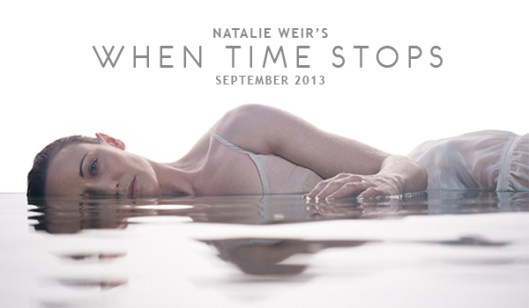
DANCE REVIEW: When Time Stops

Words: Tahnee Robinson

We awake in the underworld, on the banks of the river Acheron. The Ferryman (Thomas Gundry Greenfield) is rowing away from us. He will row for most of the performance, quiet and inexorable, as we linger by the river. He is a towering figure, but he is not unkind: he will wait patiently for his charge until she is ready. When Time Stops takes us through the last moments of a life, picked up in a rush of memories before making the final crossing.

Bill Haycock and Iceworks Design’s underworld is a beautiful creation, haunting but without malice, and deceptively simple. Comprised of mirrored surfaces and windows, backlit panes and a hidden door, the set is beautifully atmospheric and very flexible — a must for this performance, which places its entire musical ensemble on stage for parts of the piece. The lighting, designed by David Walters, is ingenious and integral, maintaining the subdued sorrow of the underworld but showing us glimpses of life — elation, love, terror — with a scattering of stars or a beam of sunlight falling across a face.

There are more musicians than dancers; Iain Grandage’s composition is performed by Camerata of St John’s, a chamber orchestra of string players sans conductor. There are 12 of them, and they move around and amongst the dancers as they play. This is no mean feat: creeping a bass, two cellos, two violas and seven violins around a stage occupied by a company of contemporary dancers in mid-flight is an extraordinary work of choreography and focus. The musicians are part of the performance — as they should be; the compositions are integral to the mood of the piece and to understanding what is being depicted.  The strings are perfect for this, their richness and many tones provide a degree of emotional nuance that is essential to our understanding of each section.

When TIme Stops (EDC)There are parts of When Time Stops that are particularly affecting. Broken into a series of moments of profound importance to the dying woman, it is largely up to the audience to imbue these impressions with meaning.  Amongst these segments is ‘First Kiss’, which stirs a sense of sweet nostalgia and innocence, reminding the audience of first-love elation without overstepping into melodrama. Later, there is ‘Scan’, which makes clever use of the set and lighting to imply a medical emergency of some kind — intimations of mortality revisited at the time of death. ‘Time’ is represented by a little silver orb, around which Daryl Brandwood dances with extraordinary feline skill and control; the orb is captured and released with joy and desperation.

The dancing is extraordinary, and each of the seven company members brings an intense commitment and control to the performance. They are uniformly graceful and astonishing, contorting themselves into impossible positions with complete fluidity and a superb awareness of each other. Natalie Weir’s choreography is inventive and intimate; The Woman (Riannon McLean) reviews her life with fear and longing, often reaching out to the visions she sees, embracing her memory of herself or her lover. It’s romantic, and often sexual, without being tawdry or overt; these intimacies are the highlight of the performance, as the dancers lift and hold each other, entwining and separating.

WHEN TIME STOPS by Expressions Dance Company is on at the Playhouse, QPAC, until September 14, as part of Brisbane Festival. Tickets $48–58.

TAHNEE ROBINSON is a Brisbane-based writer. She was OffStreet Press’s visual arts, film and fashion editor.

INTERVIEW: Fetish Fridays

Much more fun than Casual Fridays, Frankie Vandellous (curator of Alchemy) has collaborated with HazyinSeptember (from Brisbane Leather Pride) to run a trio of evenings celebrating Brisbane’s kink communities: Fetish Fridays. Over three consecutive weeks, Number 29 Club has been home to all sorts of playtimes for public consumption. The final show is coming up — this Friday, 6 September. I spoke with Ms Vandellous herself (on the night of the second show) to find out a little more.

Words: Zenobia Frost
Photos: Stuart Hirth

ZF: Take me on a tour of the venue on Fetish Fridays; walk me through that front door and describe the atmosphere you wanted to create.
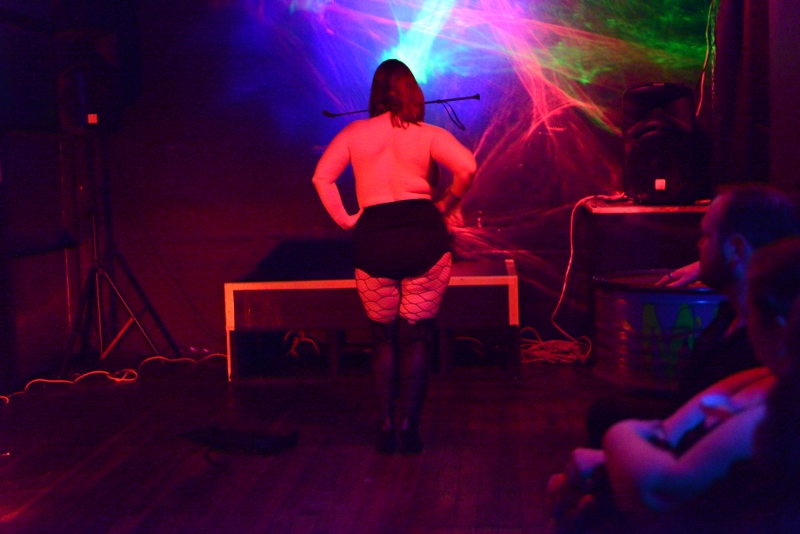
FV: Fetish Fridays is being held on the lower level of the Number 29 Club, a male-only club — so already, we are staging a revolution! An open-air courtyard leads to a dark room with a small stage at the other end. It feels like a “back room” performance: alternative, underground, where anything could happen (and does)!

Photo by Stuart Hirth

ZF: It sounds like FF#1 was an electrifying success with audiences. Tell me about your goal: to create a safe space to blend fetish with theatre.
FV: With established Doms, burlesque dancers, and drag performers in our program, we turned kink into performance. My aim was to provide an opportunity for the “kinky and the curious” to celebrate Brisbane’s vibrant kink community, showcase its diversity, and to show how technique can be elevated into artistry. I hoped to provide a launching pad for discussion and a desire to engage further in the community.

ZF: Do you think FF#1 was successful in those goals — did it educate and titillate?
FV: I walked away from FF Part I feeling that this event was one of the best I have worked on in a long while. There was not a single heteronormative performance on the first night, and the energy of the room was one of celebration and community. I know that some audience members walked away feeling a renewed interest or hunger. I hope that they find satisfaction.

ZF: Tell me about the crowd — I bet they were a well-dressed bunch.
FV: There was such diversity! There were corsets and fetish-wear, suits and sweatpants — even leather harnesses and jock straps! We also had a diversity of ages and experiences with kink. We had attendees who had never even attended a burlesque show sharing the room with established members of the kink community. This was a truly inclusive event.

Photo by Stuart Hirth

ZF: How has the BDSM community in Brisbane taken to these gigs? What kind of feedback have you received?
FV: Both the performers and the audience have given me great feedback; there is a lot of excitement about this project, and I have heard that it has been spoken about extensively in the BDSM community over the weeks leading up to it. As our first attempt, we are improving each week, and certainly looking to enhance the viewers’ experience in the future. The team involved in this project are already planning our next step… Stay tuned…

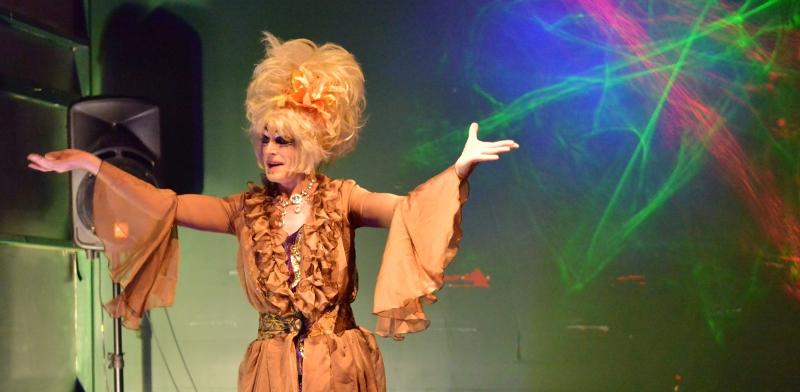
ZF: FF#2 focused on gender-bending, drag and burlesque. What were the highlights?
FV: There were so many performers that I was excited to watch last night. I love Vivienne VSassy’s burlesque performances and appreciate RedBear’s passion for rope. I knew that Miss Gen had been working extensively on her rope routine and she is a true rope artist, and I was excited to see Tara Raboom Deay perform her drag strip routine. I was also very excited to see Labrys perform — the last show of the night. She blew me away with her aesthetic vision, safety precautions, attention to detail, and performance. I will just say that it involved a hospital bed, needle play, a violet wand, a camera projecting live onto a television screen, a Whitney Houston song, and an actual female orgasm.

Photo by Stuart Hirth

ZF: Each FF has raffled prizes in support of QAHC — a damn good cause. Do you feel it’s perhaps time for Brisbane’s queer and kinky folks to rally together against potential consequences of the coming election?
FV: It is always the time to rally together. That is the short answer. Certainly, events such as Leather Pride are perfect expressions of the interplay between the kink and queer communities. However there are a number of aspects to this issue that Brisbanites will need to negotiate in order for there to be consolidation allowing for political action. It is my hope that FF can create a place for intersection and good-will.
My reasoning in creating a raffle for QAHC was the concept of what constitutes a “healthy community”. I truly believe that a healthy city has both a vibrant creative culture and sexual culture, where participants can express themselves in dymanic and healthy ways. QAHC has a history of supporting the kink community. For example, they have allowed Peer Rope to utilise the QAHC space for monthly workshops.

ZF: The final event samples kinky delights. What kind of advice would you give a curious beginner.
FV: Have an open mind. We are offering an event in the spirit of community building, fundraising, and hospitality. Everyone is welcome. Certainly, elements of the evening may be shocking for some viewers. It is vital to understand that those involved in the show are rehearsed, and experienced individuals versed in Risk Aware Consensual Kink (RACK), they know exactly what they are engaging in, and have the ability to stop at any time. Not all performances will be on that side of the spectrum, however; we have moments of comedy, dance, and lots of fun as well.

The final FETISH FRIDAY, Part III, takes place on 6 September, 2013. Tickets are $15 on the door.

REVIEW: Medea: The River Runs Backwards

Words: Tahnee Robinson

The Old Museum is a beautiful venue for an interpretation of the myth of Medea. The supports that run floor-to-ceiling transform readily into a Grecian ruin, and the chorus leads us through the doors and past the relics to be seated. Christine Urquhart’s set is simultaneously complex and minimal — there is a lot of space, and the production will use all of it, but with the pillars and a chorus occupying the stage there is surprisingly little room for props. A swathe of white fabric flowing from the ceiling, slashed into three sections, functions as a wall, a window and a veil; at one point a distraught Medea (Lauren Jackson) stands before it while the beautiful Glauce (Mollie Yang) taunts her between the gaps.

Julian Napier’s costumes are lovely and the chorus, in their flowing, glossy gowns, feel almost like a natural extension of the set.  Medea’s gown is well-suited to the choreography of the part: she is beautiful but uncontrolled.

Lauren Jackson in "Medea"

Zen Zen Zo are renowned for their physical theatre, but this production relies heavily on the acting chops of the cast. Eric Berryman is utterly magnetic as Jason; his presence steals the show. Lauren Jackson, who plays the rapidly deteriorating Medea, is a dancer by profession, and she shines during the more choreographed sections of the show: her dance with Eros (Brennan Campbell) is beautifully executed and both performers are clearly in their element.

The whole performance feels carried by the dedication of the chorus; the seven members function alternatively as Medea’s handmaids and the more traditional collective voice of the story. Their singing, dancing and narration walk us through the tale. The commitment of the individual members is evident — without it there would be something flimsy about the whole play, but they provide a certain sincerity that glues the production together.

Medea’s children are central to the story, but there are no children in the company. Their presence is signified only by their cries. It’s a difficult effect to achieve and it doesn’t quite work, from a sound-design perspective, though the choral arrangements and other effects are successful. The soundtrack also utilises some contemporary classic music — Etta James and Nick Cave both make an appearance.

Medea the character is already pretty crazy at the start of the story – this version skips over her initial love affair with Jason and starts after his betrayal — and she swiftly gets crazier. I would have liked to have seen more emphasis on this arc, to see the intensity of Medea’s love transformed into the kind of madness that might drive someone to murder her own children.

MEDEA runs at The Old Museum from 19 Aug to 7 Sep, 2013.

TAHNEE ROBINSON is a Brisbane-based writer. She was OffStreet Press’s visual arts, film and fashion editor.

REVIEW: Tequila Mockingbird

Words: Tahnee Robinson
Photos: Dylan Evans

In Tequila Mockingbird, shake & stir theatre company reinterpret Harper Lee’s classic in a distinctly Australian context — an idea very much in keeping with their mission statement: to “motivate, educate and relate to youth.” Thus, Tequila Mockingbird takes us to the township of Stanton, barely a dot on the map — where it hasn’t rained for a long, long time.  The town, like much of the play, functions as a symbol of country Australia: there’s a Food Store that closes at five, a newsagent, a pub and a cast of salt-of-the-earth folks just trying to get by.

All of these places are created on a single set that is simple, but clever. Back-lit walls change colour to indicate different locations, and to differentiate between outside and inside. Three metal cages are moved around to form fences, couches and the bar at the pub as required.

Photo credit: Dylan Evans

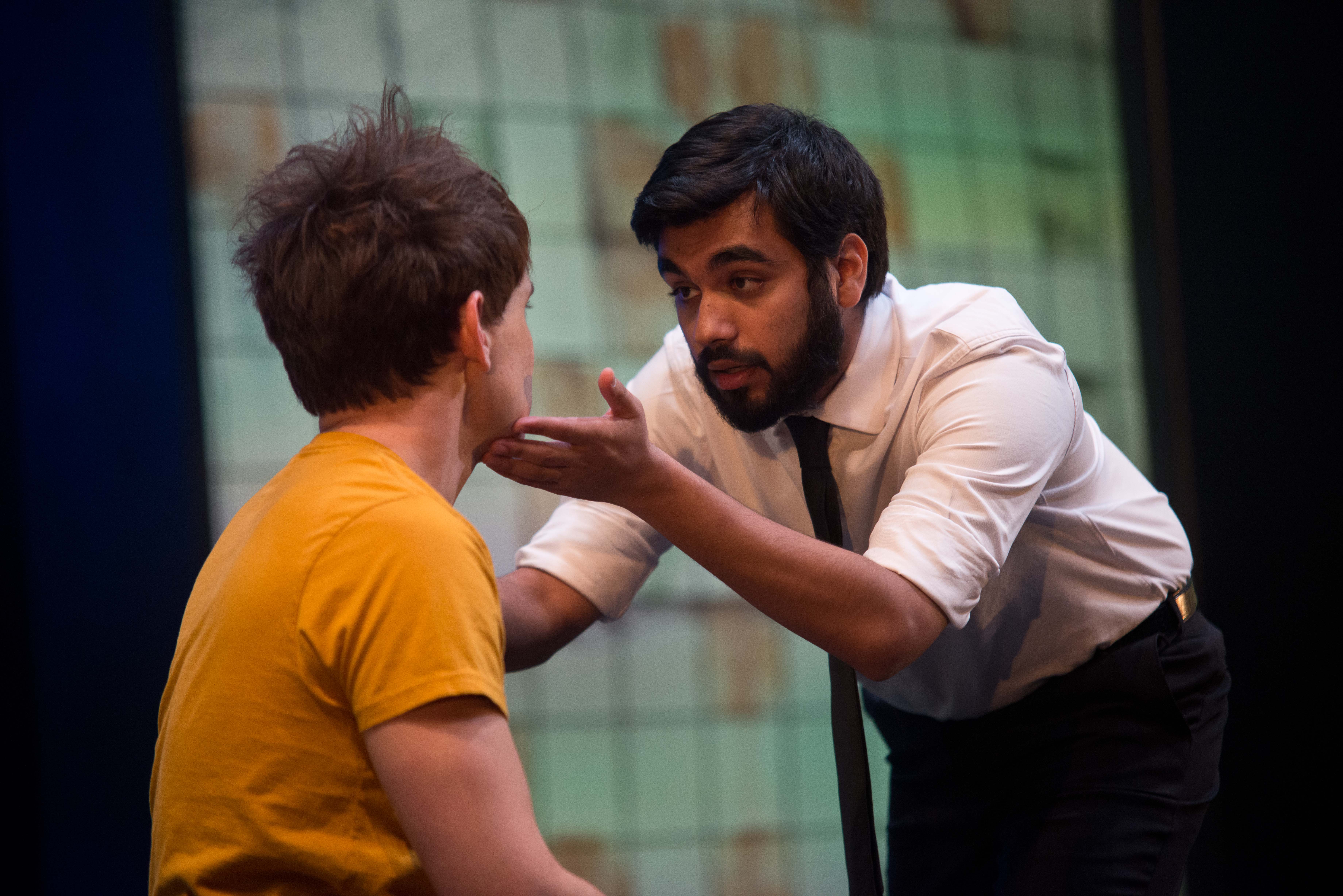
Charlie (Nick Skubij) has been dragged to this particular end of the Earth from Sydney after his parents’ separation, and he’s not impressed. He’s not the only newcomer to Stanton; there’s also an Indian doctor named Sameer, played by Shannon Haegler. References both to the source text and some of Australia’s present cultural issues are made clear; the play evokes the Cronulla riots, violence against Indian students, the phrase “fuck off, we’re full” and various other blights that have nixed attempts to declare Australia a post-racial society. Sameer himself references these indirectly, repeating throughout the play that his father had not wanted him to come to Australia. He even cracks a Jayant Patel joke. The scene is played for laughs, but it also serves an important function: to remind us that as a minority you are always in danger of your actions becoming representative of an entire ethnic or social group.

There is a lot of humour in Tequila Mockingbird, and it’s well received by the audience.  As a child of rural Australia these scenes made me smile in weary recognition more often than laugh out loud. Barbara Lowing shines in this department, switching between Sue the publican, Trish the alcoholic and Karen the concerned neighbor. A cast of six plays 11 characters and the whole team is adept at the rapid transitions; there’s no danger of confusion. Lowing in particular seems to function as a sort of country matriarch composite. Always loud and a little bit nosey, all three characters are stereotypes, but they’re supposed to be: I’ve been cackled at by the shrill alcoholic in the liquor store, and cornered by the concerned neighbour. The audience giggles and gasps in horror as Trish tells Sameer that all rice tastes the same with curry on it, and I wonder at the difficulty of tackling racism without accidentally falling prey to classism. shake & stir have taken on a big task with this production; they’re trying to cover a lot of ground in a relatively short time frame.

Photo credit: Dylan Evans

There’s a lot of time dedicated to build, and the key event — the assault on a young woman, Rachel (Nelle Lee) — takes place past the halfway point. From here, the pace speeds up. In addition to racism, the play also deals with the social symptoms of small-town death, and the cycles of hardship that feed them (alcoholism, unemployment and youth boredom come to mind). One of these is domestic violence. To defend Sameer, Richard (Bryan Probets) has to put Rachel on the stand to testify in court.  The scene is uncomfortable, and in the defense of the innocent the actual victim of the crime is cast as a villain. This isn’t acknowledged in the play, and after this point Rachel has no voice at all. The audience isn’t reminded that Rachel is lying under threat of further violence, and there is no sense of resolution to her situation.

One of the criticisms levelled at Lee’s original novel is that it’s a white-saviour story. It would have been nice to see this issue addressed more thoroughly in the interpretation. We hear from Sameer, but it feels a little shallow; his unfailingly polite acceptance and determination seem like an idealised version of a person.

Tequila Mockingbird deliberately avoids resolution in another area, too. In the original tale the stalwart Atticus Finch finds his faith shaken. Likewise, Richard is badly rattled by the course of events; angry and shocked he tells Charlie that “you can’t teach people like them.”  It’s a much more thought-provoking conclusion than a tight, comfortable resolution, and it better serves the play’s purpose: to leave the audience thinking.

TEQUILA MOCKINGBIRD is on at the Cremorne Theatre, QPAC until September 7. Tickets $30 – $52.

TAHNEE ROBINSON is a Brisbane-based writer. She was OffStreet Press’s visual arts, film and fashion editor.

REVIEW: Confessions of a Control Freak

Words by Tahnee Robinson

Confessions of a Control Freak finds Belinda Raisin — actor, singer and former ballerina — exploring the pitfalls and foibles of her alter-ego Frances, a self-confessed control freak. But is she, really? Frances herself seems unsure. Certainly she likes a good list — Raisin makes a good start early on with an aria to her lists: lists that appear on post-its and clipboards, laminated on the toilet wall and unravelling for metres out of a filing cabinet. It sets the scene well, and the gangly faux-sexy dance as she twines the enormous list around herself and between her legs is a good indicator of what’s to come — Raisin plays the sexy dork well, and she makes Frances simultaneously a harried neurotic and a bit of an everywoman. And that’s what Confessions is really all about: can women (or this woman, at least) really have it all? It’s an old theme, but that doesn’t mean it’s a bad one, and Raisin tackles it endearingly, expanding on habits and tics that have the audience chuckling in recognition.

Confessions of a Control Freak opens with Jamie Teh at the piano. Teh, blind since birth, shares the stage with Raisin for the duration of the show, providing musical accompaniment and sound effects with unobtrusive dignity — even whilst holding up a sign that says, “She has I.B.S.”. He and Jennifer Teh are responsible for the musical compositions, and the soundscape ranges from 70s electro-pop to Disney. The music comes as a surprise, and audiences might have expected more original work, but the use of iconic hits works to the show’s advantage. Raisin’s voice is quite good — it’s arguably the weakest element of the show, but that doesn’t really matter. The point of sampling Adele’s “Someone Like You” with regard to one of Frances’s (many, many) deceased pets is not to showcase Raisin’s pipes, and it doesn’t need to be.  Mary Poppins’s “A Spoonful of Sugar” (confession: Frances LOVES cleaning) is, in this instance, a very large glass of wine. And that vodka taking up door space in the fridge.

ConfessionsOfAControlFreak3_3FatesMedia

The Poppins-themed cleaning montage sees Raisin, having unearthed a trove of useless treasures, zooming around the Judith Wright Centre in rollerblades, handing out glasses of wine to audience members. It’s one of the better “feed the audience” inclusions I’ve come across, and watching a woman fly around a cluttered space on wheels, brandishing brimming glasses of alcohol, evokes precisely the amused-horror you might feel watching a friend having a manic moment. Needless to say, the job does not get done.

It’s a short performance, clocking in at around 60 minutes, but sometimes the material feels a little thin. Perhaps that’s because it’s a cabaret about the everyday — there’s no velvet here, nor feathers — but the pacing feels occasionally sluggish at moments.  Frances turns serious toward the end — an abrupt segue from the dead pets montage, which has the audience highly entertained — meditating on children, and whether having babies is something she really wants, or whether it’s just the next item on the list. This is a question that’s probably been considered by every couple of child-rearing age for the last few decades; it’s no doubt relevant. But something about it feels a little disappointing, like there’s nothing revelatory to be had here. I was happier when Frances’s “bundle of joy” was set to be a puppy (pity about what happened to that bunny, though).

As a whole the show is very warm, and Raisin’s slightly gawky physical humour goes down well with the crowd. The Judy is an excellent venue choice for the show, fostering the intimacy it replies on and allowing the audience to become part of the antics. It’s worth a visit for the slightly-scattered list-maker in all of us. After all, we’re all just trying to keep a job, find love, stay fit, see our friends and develop some hobbies, right?

CONFESSIONS OF A CONTROL FREAK is on at the Judith Wright Centre for Contemporary Arts until 17 August. Tickets $19–24.

TAHNEE ROBINSON is a Brisbane-based writer. She was OffStreet Press’s visual arts, film and fashion editor.

REVIEW: The Lady of the House of Love

A restaging of a 2008 Brisbane hit, Metro Arts hosts The Lady of the House of Love. Daniel Evans adapts this tragic tale of a lonely, reluctant vampire — bound more by habit and ritual than by her curse — from Angela Carter’s 1979 short story of the same name. (Read my recent interview to find out more about the play’s history.)

Above all, as a one-man production, The Lady of the House of Love reminds us of the power and pleasure of a good storyteller. Sandro Colarelli’s shape-shifting performance is central. Reaching through the rose-laden lattice of an isolated chateau, he seduces us into Carter’s rich text. Choreographed by Neridah Waters, Colarelli is at once narrator, strong man and strange woman, whose beauty “is a symptom of her disorder.”

Sandro Colarelli (photo by Nat Lynn)

Jake Diefenbach’s compositions ensure that The Lady of the House of Love transcends from a good play into an astounding chamber production. (It’s well-worth picking up the soundtrack, coproduced by James Lees and Bryce Moorhead, on the night.) It’s uncanny to hear Diefenbach’s distinctive lyrics and musical signatures sung in Colarelli’s hypnotic voice. At the piano, John Rodgers faces away from the audience, but his presence is front and centre, alongside Colarelli.

David Fenton directs a production that is unashamedly gothic — though not without wit; this feels entirely right, considering the text’s deference to Victorian melodrama. In the music as well as the costuming, there’s a little ’80s goth too. Josh McIntosh’s design and Andrew Meadows’ lighting work together to suggest candle-lit boudoirs, dense with incense and dust, deep in the stone heart of a mountain chateau.

There are a couple of moments wherein the melodrama could be reined in just a touch, but in the Countess’s “cave full of echoes” there is little room for subtlety. And who could deny her a little excess when her worn tarot cards, laid out and laid out again, finally reveal a change of fate — from La Papesse, La Mort, La Tour Abolie . . .

THE LADY OF THE HOUSE OF LOVE runs at METRO ARTS from 26 Jul to 3 Aug. The production’s soundtrack will be available for purchase at Sue Benner Theatre.